About
About Missing Umami
We don't publish recipes. We decode why Chinese food tastes the way it does.
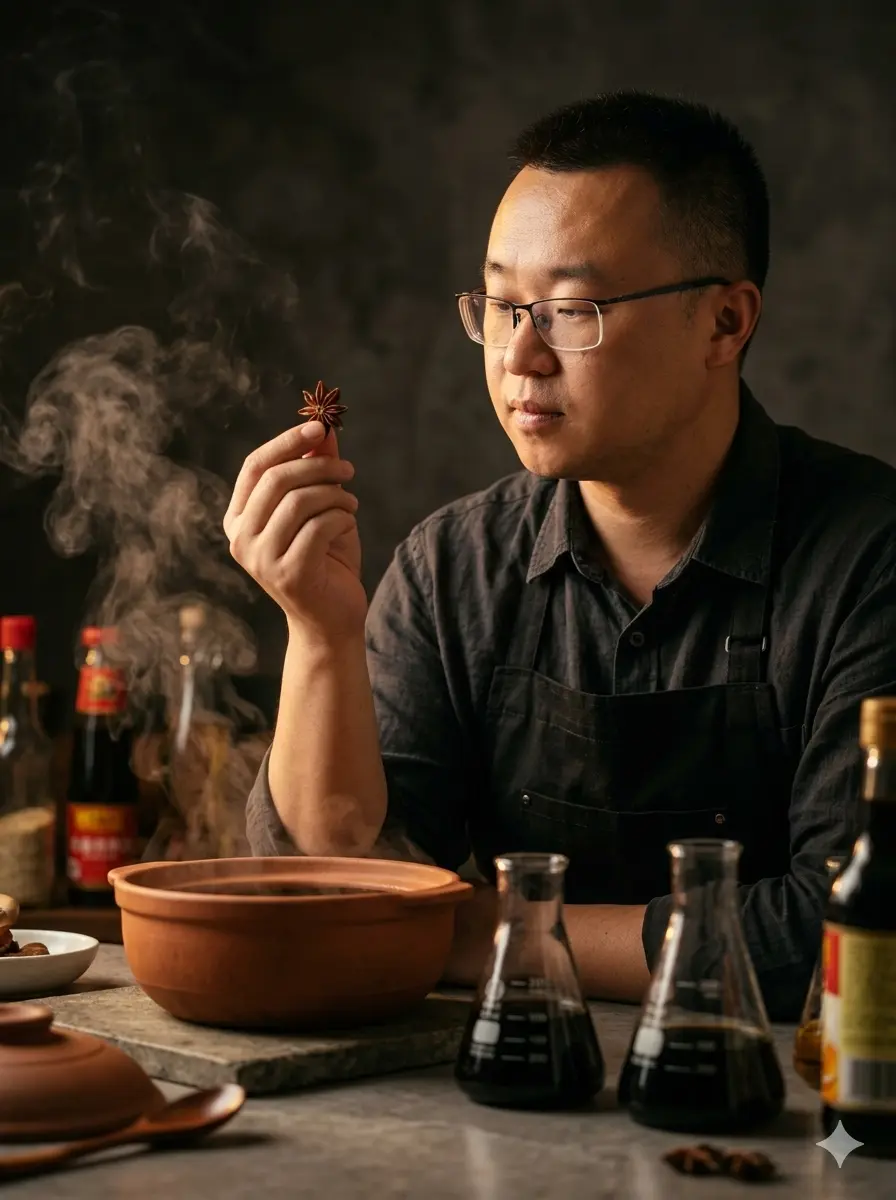
Model Flavor System
Approach Diagnosis First
Audience Serious Home Cooks
Core Claim
Missing Umami is a Chinese Flavor Expert System: part knowledge graph, part diagnostic tool, part cultural translator.
Manifesto
We Don't Publish Recipes.
We decode why Chinese food tastes the way it does.
The internet has millions of Chinese recipes. What it doesn't have is understanding. Why does your stir-fry taste flat even though you followed the recipe? Why did your Mapo Tofu turn into soup? Why is your Sichuan food spicy but not numbing? Why can't you replicate that restaurant flavor at home?
The answer is almost never your cooking skill. It's ingredient literacy - knowing which soy sauce does what, which tofu survives a stir-fry, which vinegar gives Kung Pao its signature punch, and how to stack umami like a Chinese grandmother stacks her pantry.
Missing Umami is a Chinese Flavor Expert System. It's part knowledge graph, part diagnostic tool, part cultural translator. Every ingredient page is built on a flavor vector - an 8-dimensional numerical profile of how an ingredient tastes. Every substitution has a mathematically computed compatibility score. Every failure diagnosis is probability-weighted.
Method
The Flavor Vector System
Every ingredient in our database is mapped across eight dimensions: Saltiness, Umami, Sweetness, Acidity, Heat, Aroma, Color, and Viscosity. Each dimension is scored 0-100 based on expert assessment, comparative tasting, and literature review.
When you ask "can I use Tamari instead of Light Soy Sauce for Kung Pao Chicken?", we don't give you a blog opinion. We compute the cosine similarity between two 8-dimensional flavor vectors, weight them by culinary importance, factor in the dish's specific requirements, and output a compatibility score with exact compensation steps.
Tools
What the Site Actually Does
Soy Sauce Decoder
Is that bottle right for your dish? Two modes: dish-first or sauce-first.
Tofu Type Matcher
Which tofu for Mapo Tofu? Fried rice? Soup? With visual ID guides.
Substitution Calculator
Compatibility scores, lost notes, and exact compensation for every swap.
Wok Checker
Which wok for your stove? With wok hei potential percentages.
Pantry Audit
How Chinese-kitchen-ready are you? Cuisine readiness scores and shopping lists.
Network
The Way of Nature
Missing Umami is the "Food" pillar of The Way of Nature - a trinity of sites exploring how to live in harmony with natural principles.
Builder
Who Built This
I'm Mike Sang - a digital strategist, growth hacker, and fermentation science enthusiast living in China. I've spent 15 years learning the difference between what Chinese cooking actually is and what the English-language internet says it is.
I built Missing Umami because I've stood in too many Asian grocery aisles, holding two identical-looking bottles, knowing one would make my dinner great and the other would ruin it - and having no way to tell which was which.
My background bridges two worlds: the precision of digital strategy and growth engineering, and the wisdom of Taoist philosophy. Missing Umami is where these meet - a data-driven flavor operating system wrapped in the warmth of a Chinese grandmother's kitchen.