Cuisine Cluster
Chinese Regional Cuisines
Explore Chinese regional cuisines through flavor profiles, ingredients, and the cooking logic behind Sichuan, Cantonese, Hunan, and more.
Each Chinese cuisine is a logical system — shaped by geography, climate, and centuries of ingredient adaptation. Sichuan fermented because of humidity. Cantonese steams because freshness was never the problem. This cluster unpacks what each tradition optimizes for, and why cuisines matter more than recipes.
Profiles Live
3
Driving Force
Geography
Best Tool
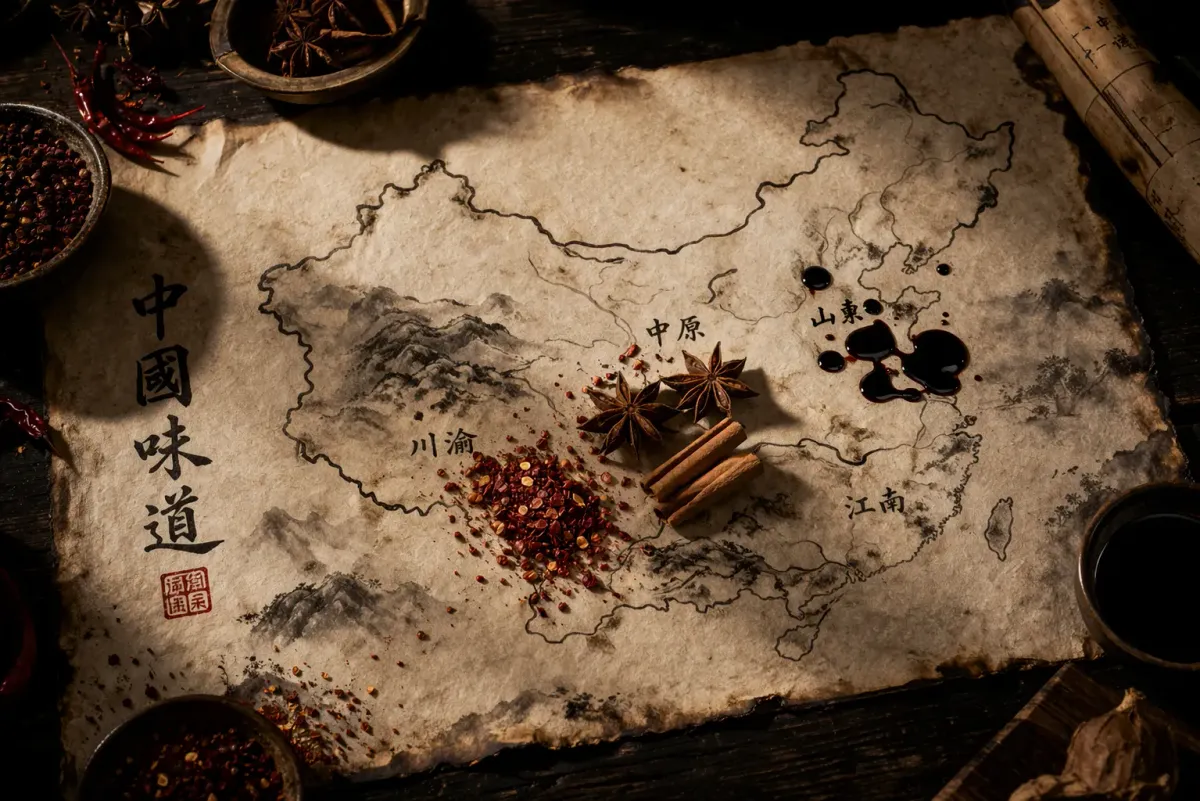
Flavor Map
Inside This Cluster
More Than Recipes: Why Cuisines Matter
A single dish tells you what grows nearby, what the climate favors, and what local cooks learned to work around. Mapo tofu isn't just spicy — it's a solution for humid Sichuan storage. Steamed fish isn't just Cantonese — it's the logical endpoint of a region with fresh catch year-round.
That's why this site organizes around cuisines, not recipes. Recipes are individual answers. Cuisines are the frameworks that produce them. When you understand a cuisine's base logic — what it optimizes for, what ingredients are plentiful, what techniques evolved to handle local conditions — you can predict what a dish should taste like, even if you've never seen it before.
The Eight Major Schools
Chinese culinary tradition recognizes eight major schools, each tied to a specific region with its own geography and climate:
Sichuan (川) — Numbing, spicy, aromatic. The humid Sichuan Basin drove deep fermentation: doubanjiang, pickled chilies, preserved vegetables. Sichuan peppercorn's hydroxy-alpha-sanshool creates a tingling sensation that stimulates salivation — a biological response to a damp climate. The numb-and-spicy combo isn't random; it's practical.
Cantonese (粤) — Fresh, clean, original taste. Subtropical and abundant coastline. With the freshest seafood and produce in China within easy reach, Cantonese cooking optimizes for minimal intervention. Steaming, blanching, and quick stir-frying preserve texture and natural flavor. If an ingredient isn't fresh, Cantonese cuisine has nowhere to hide.
Hunan (湘) — Direct heat, sour-spicy. Even more humid than Sichuan, Hunan uses fresh chilies and pickled chilies — a "double heat" strategy. The sour element from pickling cuts through rich, oily dishes, balancing the burn with acidity.
Jiangsu (苏) — Precise knife work, gentle braising. The fertile Yangtze delta has four distinct seasons. Jiangsu cuisine values shape and presentation as much as flavor. Soups, stews, and braised dishes dominate — slow cooking suits the region's fresh vegetables and freshwater fish.
Shandong (鲁) — Salty, hearty, soup-based. The oldest of the eight schools, Shandong relies on scallions, garlic, and rich broths. The temperate coastal climate calls for warming, filling food. Its techniques spread across northern China and still define many "northern" dishes today.
Zhejiang (浙) — Fresh, soft, slightly sweet. A mild lake-dotted landscape along a wealthy trade route. Think West Lake vinegar fish and Dongpo pork — dishes that balance sweet and savory without aggressive seasoning. Refined but not fussy.
Fujian (闽) — Umami-rich, broth-focused. Mountainous coastline with abundant seafood. Fujian is known for "drunken" dishes cooked with rice wine and for its deep soup culture. Red yeast rice and shrimp paste add color and savory depth.
Anhui (徽) — Wild ingredients, heavy braising. Mountainous and inland, Anhui cooks rely on foraged greens, bamboo shoots, and wild mushrooms. Braising tenderizes tougher mountain ingredients. Less known internationally, but arguably the most terroir-driven of the eight.
Geography Is the Ingredient
The pattern repeats: geography drives ingredients, climate drives preservation methods, and both together shape technique. Inland regions fermented and pickled because humidity made fresh storage unreliable. Coastal regions steamed and blanched because freshness was never a concern. Northern regions developed wheat-based cooking. Southern regions perfected rice.
Each cuisine profile in this cluster follows a consistent format: flavor taxonomy, key ingredients, representative dishes, and the logic behind them. If you're new, start with Sichuan and Cantonese — they're the most distinct and the easiest to contrast. From there, Hunan deepens the heat story, while Jiangsu and Shandong broaden the picture with entirely different priorities.
Ready to explore the flavor logic behind China's great cuisines? Click any card below to dive in.
Explore the Cluster
Resources, tools, comparisons, and failure paths.
Track 1
Cuisine Profiles
Track 2