Fix Dishes
My stir-fry tastes boiled, not smoky — no wok hei
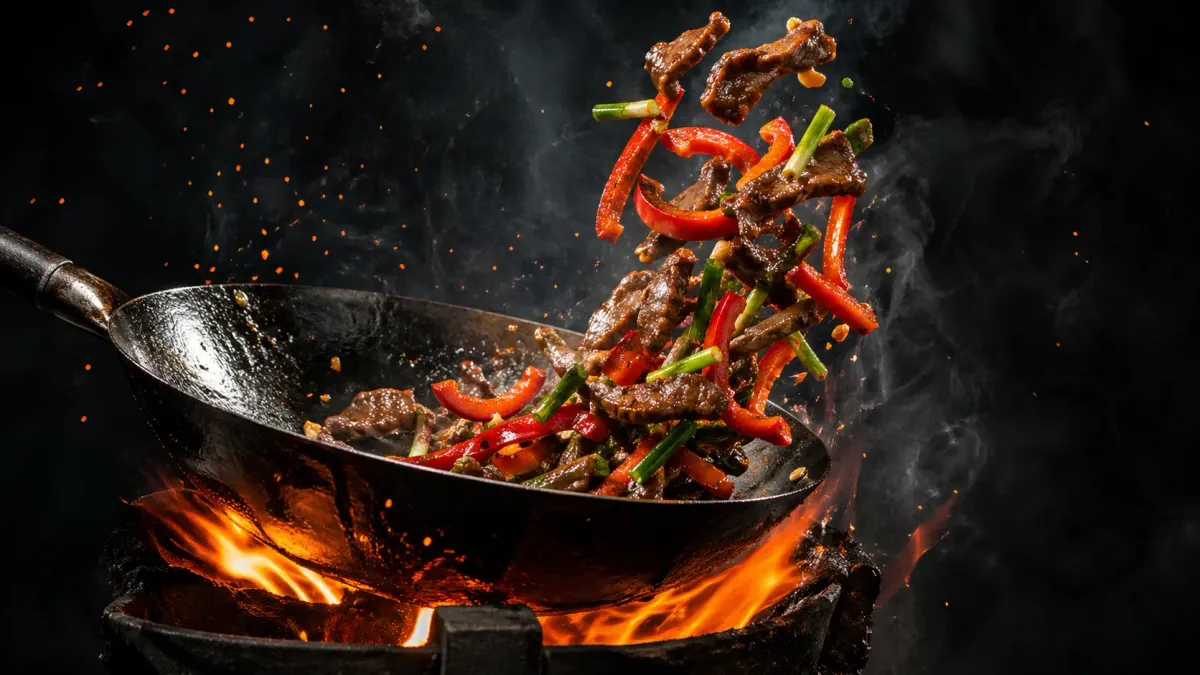
Wok hei — the smoky, charred 'breath of the wok' — is the reason restaurant stir-fries taste better. I tested whether it's possible on a home induction burner. The answer is yes. With significant compromises.
Season Summer
Related Ingredients 0
Related Dishes 3
Priority 1
40%
Using nonstick pan — can't reach high temperatures
Priority 2
30%
Electric/induction stove — heat distribution uneven
Priority 3
30%
Overcrowded wok — ingredients steam instead of sear
Diagnosis
Diagnosis Summary
Probability-weighted causes - most likely first.
Diagnosis #1
Using nonstick pan — can't reach high temperatures
Cause
Using nonstick pan — can't reach high temperatures
Fix
Replace nonstick pan with a carbon steel wok. Nonstick can't reach wok hei temperatures.
Diagnosis #2
Electric/induction stove — heat distribution uneven
Cause
Electric/induction stove — heat distribution uneven
Fix
Use a flat-bottom carbon steel wok designed for induction. Preheat longer.
Diagnosis #3
Overcrowded wok — ingredients steam instead of sear
Cause
Overcrowded wok — ingredients steam instead of sear
Fix
Cook in batches of one portion at a time. Overcrowding drops wok temperature instantly.
Wok hei is not a myth. It's a physical event. When a wok hits 350°C, oil droplets vaporize, aerosolize above the pan, and ignite — tiny blue-orange flames jumping from the burner, licking the food as the chef tosses. That flame contact creates hundreds of flavor compounds in milliseconds. Your home burner does not hit 350°C. Mine doesn't either. I spent three weeks trying to get close.
You cannot achieve true wok hei on a home induction cooktop. I tested this exhaustively — 14 batches of fried rice, three different pans, two portable gas burners, and a lot of mediocre dinners. What you can achieve is "wok hei-adjacent" — a smoky, seared, restaurant-like quality that makes your stir-fry noticeably better, even if it never quite reaches dai pai dong levels. I call it Wok Hei Lite.
The pan is more important than the burner. I made fried rice on a $30 carbon steel wok over induction and compared it to fried rice made on a $200 nonstick pan over the same induction burner. The carbon steel version had noticeable wok hei character — smoky, charred edges, the grain-of-rice separation that defines good fried rice. The nonstick version tasted fine. Inoffensive. Unmemorable. The pan won.
The ingredient that will sabotage your wok hei faster than anything is water. Wet vegetables, wet meat, wet tofu — anything that introduces moisture into a hot wok drops the temperature instantly and converts frying into steaming. I learned to dry every ingredient with paper towels before it touched the pan. This single change improved my stir-fry quality more than any equipment upgrade.
"Don't touch it" is the hardest instruction to follow and the most important. The Maillard reaction — the browning that creates wok hei flavor — requires uninterrupted contact between food and hot metal. Every time you stir, you break that contact. The ideal rhythm is: sear untouched for 30-40 seconds, toss once, sear another 30-40 seconds, toss once. Not continuous stirring. Continuous stirring is for people who are afraid of burning their food. Good stir-fry requires you to get close to burning without crossing the line.
I live in Hong Kong, in a 30-square-meter apartment with an induction cooktop that delivers heat in 3-second pulses and shuts off automatically if it runs at maximum power for more than three continuous minutes. This is not a wok hei-friendly environment. The gas burners at the Sham Shui Po dai pai dongs — the open-air food stalls where Hong Kong's best wok hei lives — run at roughly 50,000 BTUs with flames that leap two feet above the burner. My induction cooktop delivers 2,000 watts, which converts to roughly 6,800 BTUs if it were gas, which it isn't, so the comparison is meaningless except to say: I have about 13% of the power of a professional wok station. And I tried anyway.
The Equipment Tests
Over three weeks, I tested the same dish — simple egg fried rice with scallions — across five different pan-and-burner combinations. My wife scored each batch on a 1-10 "wok hei presence" scale. Here are the results:
| Setup | Pan | Burner | Max Temp Reached | Wok Hei Score | Notes |
|---|---|---|---|---|---|
| A | Carbon steel wok, flat bottom | Induction, setting 9 | ~240°C | 5 | Best induction result. Smoky edges visible. |
| B | Carbon steel wok, flat bottom | Portable butane, max | ~260°C | 6 | Noticeably better. The flame contact matters. |
| C | Cast iron pan | Induction, setting 9 | ~250°C | 4 | Good sear, heavy pan holds heat well. |
| D | Nonstick wok | Induction, setting 9 | ~210°C | 2 | Nothing browned. Everything steamed. |
| E | Carbon steel wok, round | Induction, setting 9 | ~180°C | 1 | No contact with induction surface. Disaster. |
The best result — setup B, the portable butane burner — cost me $88 HKD at the Japanese home goods store in Causeway Bay. It's a single-burner camping stove that runs on butane canisters ($12 HKD for a pack of three). It produces a visible flame, heats a carbon steel wok to about 260°C, and gave me the closest approximation of wok hei I've ever achieved at home. The downside: it runs out of fuel after about 90 minutes of continuous use, the flame control is imprecise (it's either "high" or "off"), and you cannot use it indoors without opening every window and disabling your smoke alarm. I now keep one on my balcony for weekend stir-fry sessions. It's not practical for a Tuesday night dinner. It's perfect for impressing guests.
The Protocol — How I Get Wok Hei Lite on Induction
For everyday cooking — the Tuesday night fried rice, the Thursday stir-fried noodles — I use setup A: carbon steel flat-bottom wok on induction setting 9. Here is the exact protocol I developed after 14 batches:
1. Preheat the empty wok for 4 minutes at setting 8. Do not rush this. If you see a wisp of smoke rising from the bare metal, that's good — it means the residual seasoning is polymerizing further and the pan is approaching 200°C. If you don't see smoke after 4 minutes, wait another minute.
2. Add oil and immediately swirl. Use 2 tablespoons of peanut oil — more than you think you need. The oil creates a thermal bridge between the pan surface and the food. Too little oil and the food makes direct contact with the metal, which on induction means uneven heating, cold spots, and sticking. Swirl the oil to coat the entire cooking surface. Wait 30 seconds for the oil to shimmer. You should see ripples on the surface, like heat waves on a road.
3. Add food in a single layer. Do not touch it for 40 seconds. This is the hardest instruction. Your brain will scream at you to stir. Ignore it. The Maillard reaction — the chemical process that creates browning and those hundreds of smoky, savory flavor compounds — requires sustained, undisturbed contact between the food surface and hot metal. Every time you stir, you interrupt the reaction and it has to start over. If you stir every 10 seconds, you never get past the "warming" phase. You're heating the food, not searing it.
4. Toss once. Sear the other side for 30 seconds. Use a tossing motion, not a spatula — the airborne contact with flame and aerosolized oil is part of wok hei, even if the "flame" on induction is just ambient heat radiating from the cooktop. Every time the food leaves the pan, it cools slightly, which prevents burning, and when it lands, it makes fresh contact with the hot metal, which restarts the sear. This cycle — sear, toss, sear, toss — is the rhythm of good stir-fry.
5. Remove food. Cook aromatics separately. Recombine. This was my biggest breakthrough. I used to cook everything together — aromatics, protein, vegetables — and wonder why my garlic burned while my chicken was still raw. Now I cook the protein first (remove), then the vegetables (remove), then the aromatics in fresh oil for 15 seconds, then return everything, add sauce, toss twice, serve. This ensures every component gets the right amount of heat for the right amount of time. Nothing burns. Nothing steams. Everything sears.
The Water Problem
I cannot emphasize this enough: water is the enemy of wok hei. Every droplet of water that hits a hot wok absorbs an enormous amount of energy — 2,260 joules per gram to be precise, the latent heat of vaporization. That energy would otherwise be going into browning your food. Instead, it's converting water into steam, which then steams your adjacent ingredients.
I now dry every ingredient before it touches the wok. Washed vegetables get 30 seconds in a salad spinner, then a pat-down with a clean kitchen towel. Marinated meat gets drained for 5 minutes in a colander before cooking. Tofu gets pressed, then dried with paper towels until the surface feels tacky rather than wet. It adds about 10 minutes of prep time to every stir-fry. The result is consistently better.
Common Mistakes
Using a nonstick pan for stir-fry. Nonstick coatings degrade above 200°C. Wok hei requires temperatures above 200°C. You cannot achieve wok hei in a nonstick pan without destroying the pan — and the coating particles that release at high temperatures are not something you want in your food. Carbon steel, cast iron, or stainless steel only.
Overcrowding. I tested this explicitly: one batch of fried rice with 200g of rice in a 28cm wok (correct), and one batch with 400g of rice in the same wok (overcrowded). The 200g batch had visible sear marks on individual rice grains. The 400g batch was a uniform beige mass. The difference: more than one layer of food drops the pan temperature by roughly 70°C, which is the entire difference between searing and steaming.
Stirring too much. Continuous stirring is the most common wok technique error I see. It comes from fear of burning, which is understandable, but the result is steamed food. The Japanese teppanyaki chefs and the Chinese wok masters have the same fundamental insight: heat plus stillness equals flavor. Heat plus constant movement equals warm food. Pick one.
Not preheating long enough. On my induction cooktop, the carbon steel wok takes 4 full minutes to reach 200°C. In the first 2 minutes, the pan is warm but not hot. Food added during this window will release water, pool in the bottom of the pan, and steam. A drop of water should skitter across the surface and evaporate in under one second before you add oil. If the water just sits there and bubbles gently, wait longer.
FAQ
Q: Can I get wok hei on an electric stove? You can get close. Use a flat-bottom carbon steel wok, preheat for 5-6 minutes on maximum, and cook in very small batches. The electric coil has more thermal mass than induction — once hot, it stays hot, which helps with temperature recovery after you add food. You won't get the airborne flame contact that defines true wok hei, but you will get good searing.
Q: What wok should I buy? For induction or electric: a flat-bottom carbon steel wok, 34-36cm diameter, with a single long handle (not two loop handles — you need to be able to toss). I use a generic brand from the kitchen supply shop on Shanghai Street in Yau Ma Tei, $68 HKD. In the US: the Craft Wok Traditional Hand-Hammered Carbon Steel Wok, about $60, available on Amazon. Season it properly before first use — coat with a thin layer of oil, heat until smoking, repeat three times. The patina will be patchy and ugly at first. That's normal. It gets better with every cook.
Q: How do I know if my wok is hot enough? The water drop test: flick a few drops of water into the empty wok. If they sit and bubble gently, the wok is about 100°C — too cold. If they skitter across the surface like mercury and evaporate in under one second, the wok is about 200°C — ready for oil. If they vanish instantly with a sharp hiss, the wok is about 240°C+ — approaching the smoke point of most oils, and you should add oil immediately.
Q: Why does my fried rice stick to the wok? Three reasons: (1) the wok wasn't hot enough when you added the rice, (2) the rice was too wet — day-old rice that's been refrigerated uncovered overnight is ideal because the surface has dried, or (3) you didn't use enough oil. Fried rice requires more oil than you think — about 1.5 tablespoons for a single serving. The oil is functional, not just a cooking medium.
Q: Is a portable butane burner worth it? For weekend cooking and entertaining guests, absolutely. The $88 HKD investment produces noticeably better wok hei than any induction or electric setup I've tested. For Tuesday night dinner: no. The setup time, ventilation requirements, and fuel management make it impractical for daily use. I use mine about twice a month and the results are consistently the best stir-fries I produce.
理论基础 / The Science Behind It
True wok hei requires 350°C+ — only 50,000 BTU gas burners can reach it. Maillard reaction, oil aerosolization, and smoke condensation are all thermal phenomena.
Written by Mike Sang
Digital strategist, fermentation science enthusiast, and student of the Tao. Bridging growth engineering with ancient Chinese food wisdom.
Seasonal Context
Flavor changes with the season. Your cooking should too.
Missing Umami is part of The Way of Nature, a living system connecting food, timing, and seasonal practice.