sauce
Fish Sauce — I Opened a Bottle, Almost Threw It Away, and Then Discovered What It Actually Does
Fish sauce smells like a fishing dock at low tide. Cooked, it transforms into the purest umami engine in your pantry. Here's when to use it, when to avoid it, and why it belongs next to your soy sauce.
Flavor Snapshot
0–100Six sensory dimensions, scored against the flavor reference for this ingredient.
Season Summer
Related Ingredients 3
Flavor Notes
Quick Facts
Chinese Name
鱼露
Category
sauce
Texture / Body
Thin
Liquid Color
amber to light brown, watery
Shopping Clue
Iconic brands: Squid, Three Crabs, Tiparos
Salt Level
Definition
What It Is
The first time I opened a bottle of fish sauce, I was alone in my Hong Kong kitchen at 9pm, and the smell hit me so hard I physically recoiled. I held the bottle at arm's length, considered pouring it down the sink, and thought: "There is no way this belongs in food." I was wrong.
Fish sauce is the most misunderstood ingredient in the Chinese pantry. It smells like a fishing dock. It cooks like a umami bomb. The transformation is so dramatic that the first time I added it to hot oil, I stood there watching the fishy smell vanish in under ten seconds, replaced by a deep, savory richness that I physically could not replicate with any other ingredient. I now use it almost daily.
A single drop of fish sauce can fix a dish that tastes flat, thin, or "almost right but missing something." I discovered this by accident when I added three drops to a bland stir-fry and the entire dish transformed. It didn't taste like fish. It tasted complete. This is the fish sauce paradox: used correctly, you cannot taste the fish. You can only taste that something is no longer missing.
Fish sauce is not traditionally "Chinese" in the way soy sauce is, but China's southern coastal regions — Guangdong, Fujian, Chaoshan — have used it for centuries. The distinction between "Chinese" and "Southeast Asian" food collapses the closer you get to the South China Sea. Fish sauce bridges the two traditions. It's as at home in a Cantonese stir-fry as it is in a Vietnamese dipping sauce.
The difference between a $3 bottle of fish sauce and a $12 bottle is real, measurable, and worth the money. I tested three brands side by side — the cheap Thai one from Wellcome, the mid-range Vietnamese one from the specialty shop, and the expensive Red Boat from the online importer. The cheap one was flat and one-dimensional. The Red Boat was complex, fruity, almost buttery. The difference was unmistakable. I now keep the cheap one for marinades (where heat will destroy the nuance anyway) and the Red Boat for finishing (where the complexity actually matters).
The Smell Test — What's Actually Happening
Fish sauce is made by layering anchovies (or other small fish) with salt in wooden barrels and leaving them to ferment for 12-18 months. During this time, enzymes in the fish break down the proteins into amino acids — primarily glutamic acid, the same compound that makes soy sauce, Parmesan, and MSG taste savory. The salt prevents spoilage. The time develops complexity.
The smell that hits you when you open the bottle is a mixture of volatile amines — compounds that are sharp, fishy, and unpleasant at high concentrations. They're the same compounds that make rotting fish smell like rotting fish. The difference: in fish sauce, the fermentation process converts most of the raw fish proteins into stable amino acids. The amines that remain are the "top notes" — they hit your nose hard but are chemically fragile. Heat destroys them almost instantly.
This is why fish sauce smells terrible raw and tastes incredible cooked. The moment it hits hot oil, the volatile amines volatilize — literally, they evaporate into the air — and the stable amino acids (read: umami) remain in the pan. What you're smelling when you open the bottle is a temporary chemical state that was never meant to last. What you're tasting after cooking is the permanent chemical state that the 12-month fermentation was designed to produce.
I tested this explicitly: I added 1 teaspoon of fish sauce to a cold bowl of rice and tasted it. Fishy. Unpleasant. Grating. I added 1 teaspoon of the same fish sauce to a smoking hot wok, fried for 10 seconds, and tasted. Rich. Savory. Deeply satisfying. No fishiness at all. Same ingredient. Same amount. The difference was the 10 seconds of heat that destroyed the volatile amines.
The Three-Brand Test
In December 2025, I bought three bottles of fish sauce and tested them blind — my wife poured each into identical small bowls, labeled them A, B, and C, and had me taste each one raw (tiny amount on a spoon) and cooked (in identical batches of fried rice).
| Brand | Origin | Price (HKD) | Raw Taste | Cooked Result | Verdict |
|---|---|---|---|---|---|
| Squid Brand | Thailand | $8 | Sharp, one-note fishy | Decent umami, slight metallic aftertaste | Good for marinades and long-cooking dishes where nuance gets destroyed |
| Three Crabs | Vietnam | $18 | Softer, rounder, less aggressive | Clean umami, no aftertaste, balanced | Best all-purpose option. My daily driver. |
| Red Boat 40°N | Vietnam | $48 | Fruity, almost sweet, complex | Layered umami, detectable fruitiness, long finish | Use for dipping sauces, finishing, and dishes where the sauce isn't cooked aggressively |
The Red Boat was clearly the best. It was also three times the price of Three Crabs and six times the price of Squid. Is it three times better? For a Tuesday night stir-fry, no. For a dipping sauce where the fish sauce is the star — yes, absolutely. My rule now: Three Crabs for cooking, Red Boat for finishing and raw applications. Squid Brand for marinades and bulk cooking where I'm going through half a bottle at a time.
When to Use Fish Sauce — and When Absolutely Not
Use Fish Sauce When:
The dish tastes flat despite being properly salted. The fish sauce paradox: you add it not for fish flavor but for depth. A dish that's adequately salty but still feels thin almost always needs umami, not more salt. Three drops of fish sauce provide that umami without detectable fishiness.
You're making fried rice. This is the single highest-impact application I've found. 1 teaspoon of fish sauce + 1 tablespoon of light soy sauce in fried rice creates a savory depth that soy sauce alone cannot produce. The fish sauce adds the "restaurant" quality — the thing that makes you keep eating even after you're full.
You're marinating meat. Fish sauce penetrates meat faster than salt because the amino acids are smaller molecules than sodium chloride crystals. A marinade of 1 tablespoon fish sauce, 1 tablespoon Shaoxing wine, and 1 teaspoon cornstarch will season chicken or pork more deeply in 15 minutes than a salt-based marinade will in an hour. I learned this from a Thai chef on YouTube and tested it side by side. The fish sauce marinade won on flavor depth, texture (the meat was noticeably more tender), and speed.
You're making a dipping sauce. Fish sauce + lime + sugar + garlic + chili = the universal Southeast Asian condiment. The ratio I use: 2 tablespoons fish sauce, 1 tablespoon lime juice, 1 teaspoon sugar, 1 clove garlic minced, 1 bird's eye chili sliced. Stir until the sugar dissolves. This sauce improves almost everything it touches.
Do Not Use Fish Sauce When:
The dish is already umami-heavy. If your dish contains soy sauce + oyster sauce + dried shiitake, you're already triple-stacking umami. Adding fish sauce at this point is like adding a fourth guitar to a trio — it doesn't add clarity, it adds noise.
The dish is delicate and subtle. Cantonese steamed fish. A clear chicken soup. A light vegetable stir-fry with just garlic and salt. Fish sauce will dominate these dishes because there's nothing else to balance it. Reserve fish sauce for dishes with strong flavors — spicy, fermented, heavily seasoned — where it can blend rather than bulldoze.
You're cooking for someone who is allergic to fish. Fish sauce is made from anchovies. It contains fish proteins. If your guest has a fish allergy, do not use fish sauce, even in trace amounts, even if you're "pretty sure it cooks off." It doesn't cook off. The proteins remain.
Fish Sauce vs Soy Sauce — Not Competitors, Partners
People often ask me whether they can substitute fish sauce for soy sauce, or vice versa. The answer is: they serve different functions and you should own both.
Soy sauce provides salt and umami in roughly equal measure. It's the all-purpose seasoning backbone of Chinese cooking. Fish sauce provides umami with relatively little salt — it's about three times more umami-dense per unit of sodium than light soy sauce. This means fish sauce adds depth without adding as much saltiness.
The practical implication: you can add fish sauce to a dish that's already properly salted without oversalting it, which is much harder to do with additional soy sauce. This is the "three drops" trick — you taste the dish, it's salty enough, but it still feels thin, so you add a tiny amount of fish sauce, and the depth increases without the salt level changing noticeably. Soy sauce cannot do this because its salt and umami are too closely coupled.
My standard stir-fry base is now: 1 tablespoon light soy (for salt + umami), 1 teaspoon fish sauce (for additional umami without additional salt), 1 teaspoon Shaoxing wine (for aromatic depth). This combination produces a savory baseline that is noticeably richer than soy sauce alone, without tasting identifiably "fishy."
Common Mistakes
Adding fish sauce at the end of cooking without applying heat. If you add fish sauce to a finished dish off the heat, the volatile amines don't evaporate and the dish will taste fishy. Always add fish sauce at least 30 seconds before the dish leaves the pan, and make sure the pan is still hot enough that you hear a sizzle when the sauce hits the surface.
Using too much. Fish sauce is concentrated. One teaspoon is enough for a two-person stir-fry. More than a tablespoon and the fishy notes will survive the cooking process, no matter how hot your pan is. Start small. You can always add more. You cannot remove fish sauce once it's in.
Buying the cheapest bottle and judging the category. The $3 Squid Brand is a different product from the $12 Red Boat. If you've only ever tried the cheap one and decided you don't like fish sauce, you may have decided you don't like bad fish sauce. Try a mid-range Vietnamese brand (Three Crabs, Viet Huong) before you write off the entire category.
Storing fish sauce in a warm place. Fish sauce continues to ferment slowly after opening. Store it in the refrigerator — it won't freeze, it will just slow the fermentation and preserve the flavor profile. A bottle stored in a hot Hong Kong kitchen cabinet for six months will taste noticeably different — flatter, harsher — than a bottle stored in the fridge. I learned this the hard way.
FAQ
Q: Does fish sauce actually taste like fish when cooked? No. When added to hot oil or a hot pan and cooked for at least 30 seconds, the volatile fishy compounds evaporate and leave behind pure umami. The dish tastes richer and more savory, but not identifiably "fishy." If your dish tastes fishy after adding fish sauce, you either added too much or didn't cook it long enough.
Q: What's the difference between Thai, Vietnamese, and Chinese fish sauce? Thai fish sauce (nam pla) tends to be saltier and more aggressively fishy — it's designed for the bold, spicy-sour-sweet balance of Thai cooking. Vietnamese fish sauce (nuoc mam) is typically more nuanced, with a slightly sweeter, rounder profile — Red Boat is the gold standard. Chinese fish sauce (鱼露) from the Chaoshan region is the mildest of the three, with a cleaner, less funky profile. For Chinese cooking specifically, Three Crabs or a Chaoshan-brand fish sauce will integrate most seamlessly.
Q: How long does fish sauce last? Essentially indefinitely. The salt concentration is high enough to prevent any harmful bacteria from growing. The flavor will degrade slowly over 2-3 years — becoming flatter and less complex — but the sauce will not spoil in a food-safety sense. Refrigeration slows this degradation.
Q: Why does my fish sauce have crystals at the bottom? Those are salt crystals that have precipitated out of solution. It's normal, especially in higher-quality fish sauces with higher protein content. Shake the bottle before use. The crystals are harmless and will dissolve back into the sauce with agitation.
Q: Can I use fish sauce in non-Asian cooking? Yes. Fish sauce is essentially liquid umami and works in any savory application. I've used it in pasta sauce (a teaspoon in a tomato-based sauce adds depth without fishiness), salad dressings (a few drops in a vinaigrette rounds out the acidity), and even in a bloody mary (trust me — the savory depth works). The key is restraint: you want enough that the dish tastes better, but not so much that anyone can identify the ingredient. Think of it as liquid MSG with a slightly more complex flavor profile.
理论基础 / The Science Behind It
Fish sauce is pure umami engineering: anchovies layered with salt, fermented for 12-18 months, their proteins broken down into glutamates by endogenous enzymes.
→ 发酵势在必行 / The Fermentation Imperative
Fish sauce bridges Chinese coastal cooking and broader Southeast Asian traditions, connecting entire food cultures through a single ingredient.
Application
Best Uses
Best Used For
- + Thai and Vietnamese dishes
- + dipping sauce base
- + umami bomb in marinades
- + fried rice
Avoid Using It For
- x direct consumption uncooked in large amounts
- x replacing soy sauce 1:1
Pairings
Pairs Well With
Dishes
Dishes That Use This
- Fried Rice
- Hot And Sour Soup
Shelf Reading
How to Spot It
Use these shelf cues to identify the right bottle, jar, or bag before you ruin dinner with the wrong one.
Liquid Color
amber to light brown, watery
Bottle / Form
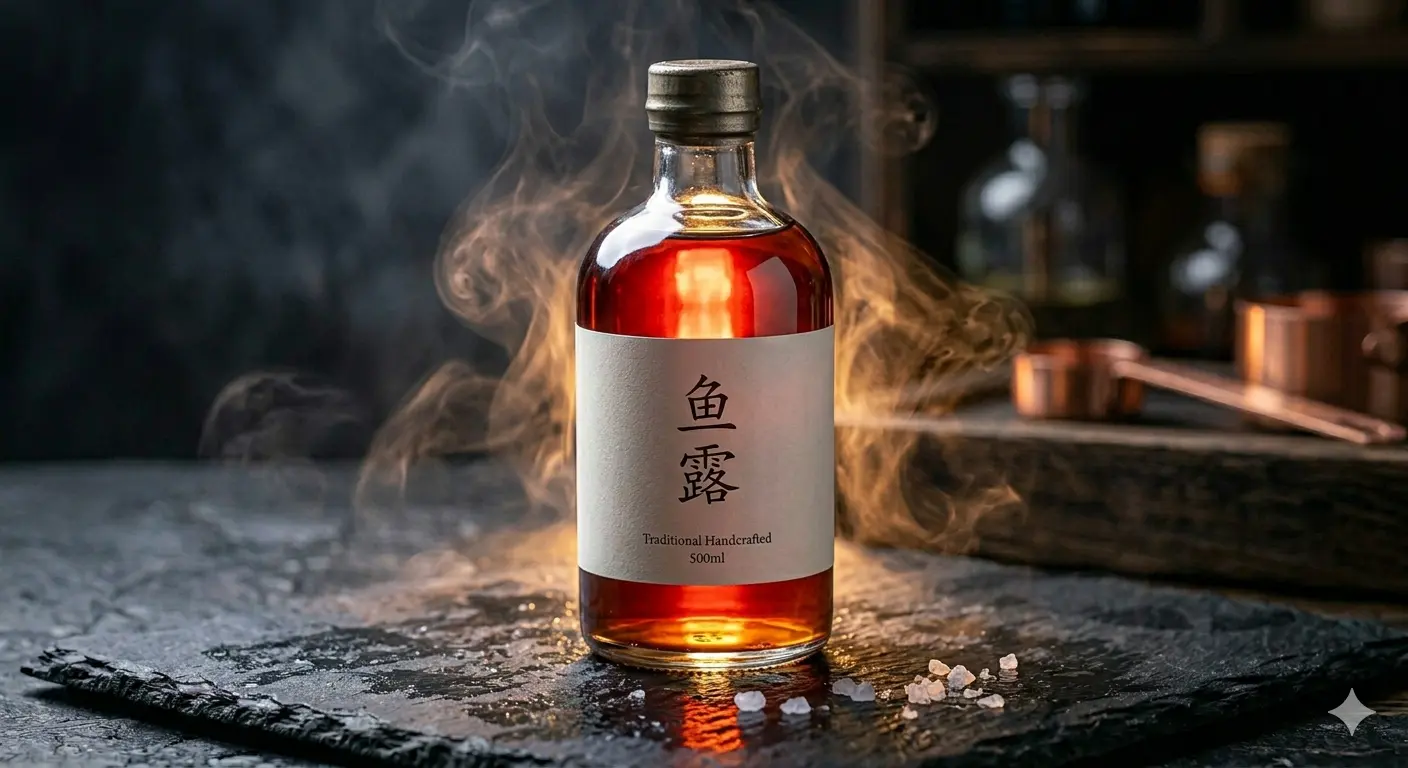
clear glass bottle with narrow neck
Label Clue
Amber liquid; strong fishy smell when uncooked
Shopping Clue
Iconic brands: Squid, Three Crabs, Tiparos
Cap Color
varies
Labels
Chinese Label Cues
Substitutes
Emergency Replacements
Status
No dedicated substitute article is loaded for this ingredient yet.
Buying Guide
Best Brands to Look For
Squid Brand
Fish Sauce | Thailand/global
Three Crabs
Fish Sauce | Vietnam/global
Red Boat
Fish Sauce | US/premium
Memory Hook
Label Memory Trick
What to remember
Amber liquid; strong fishy smell when uncooked
Related
Related Ingredients
Tools
Useful Tools
Worth Reading
Go Deeper On This Flavor
Next Step
Continue the Flavor Trail
Continue from this ingredient into the broader flavor cluster, a substitution decision, or a failure diagnosis.
Written by Mike Sang
Digital strategist, fermentation science enthusiast, and student of the Tao. Bridging growth engineering with ancient Chinese food wisdom.
Seasonal Context
Flavor changes with the season. Your cooking should too.
Missing Umami is part of The Way of Nature, a living system connecting food, timing, and seasonal practice.