sauce
Oyster Sauce — I Burned It Three Times Before I Learned How to Use It Properly
That glossy, savory-sweet coating on restaurant vegetables? That's oyster sauce used correctly. Here's what I learned about when to add it, when to avoid it, and why the brand actually matters.
Flavor Snapshot
0–100Six sensory dimensions, scored against the flavor reference for this ingredient.
Season Winter
Related Ingredients 2
Flavor Notes
Quick Facts
Chinese Name
蚝油
Category
sauce
Texture / Body
Thick
Liquid Color
thick dark brown paste
Shopping Clue
Very thick — spoon stands up in it
Salt Level
Definition
What It Is
Oyster sauce is not soy sauce with oysters in it. I used to think it was — a thicker, sweeter, fancier soy sauce for special occasions. Then I added it to a screaming-hot wok at the beginning of a stir-fry, the sugars caramelized instantly, and my kitchen filled with the smell of burnt caramel and regret. That's when I learned: oyster sauce is a finishing sauce. It goes in last, it goes in off the heat, and if you add it too early, you will taste the burnt sugar for the rest of the meal.
The best oyster sauce I've ever tasted was from a jar that cost $18 HKD at a wet market in Sheung Wan. The most expensive one I've tried cost $48 HKD at City'super and tasted like watered-down caramel with a hint of seafood regret. Price does not predict quality. Ingredients do. The first ingredient on a good oyster sauce label is "oyster extract" or "oyster extractives." The first ingredient on a bad one is "water," followed by "sugar," followed by "monosodium glutamate," followed somewhere around line six by "oyster extract (1%)." You are buying flavored sugar water at that point.
Oyster sauce was invented by accident. In 1888, a man named Lee Kum Sheung was running a small oyster-soup stall in Guangdong. One day he left a pot simmering too long. When he came back, the soup had reduced into a thick, dark, intensely savory paste. A lesser man would have thrown it out and started over. Lee Kum Sheung tasted it, realized he had stumbled onto something remarkable, and founded Lee Kum Kee — now the world's largest Chinese sauce company, the one with the red cap and the woman-and-child-in-a-boat logo that you see in every Asian grocery store on earth. The lesson: sometimes overcooking is innovation.
Oyster sauce is the reason restaurant vegetables taste better than yours. It's not MSG. It's not a secret technique. It's a tablespoon of oyster sauce added in the last 15 seconds of cooking, when the heat is off but the pan is still hot enough to melt the sauce into a glossy, clinging coating. I tested this side by side: gai lan with just salt and garlic vs gai lan with salt, garlic, and a drizzle of oyster sauce at the end. The difference is not subtle. The oyster sauce version tastes like dim sum. The plain version tastes like a vegetable.
The quality gap between "oyster-flavored sauce" and "oyster sauce" is a canyon. In Hong Kong, the difference is clearly labeled — 蚝油 (oyster oil) vs 蚝味酱 (oyster-flavored sauce). In Western supermarkets, the distinction is often blurred or missing entirely. Look at the ingredients list. If oyster extract is not the first or second ingredient, you're buying flavored syrup. I made this mistake exactly once, wondering why my stir-fry tasted like sweetened cornstarch. Now I read the label every time, even for brands I've bought before, because formulations change.
The Three-Brand Test
In November 2025, I bought three jars of oyster sauce from three different stores in Hong Kong and tested them on identical batches of blanched gai lan:
| Brand | Price (HKD) | First Ingredient | Texture | Taste | Verdict |
|---|---|---|---|---|---|
| Lee Kum Kee Premium | $22 | Oyster extract | Thick, glossy, pours slowly | Rich, savory, distinct oyster flavor, balanced sweetness | Best all-purpose. My daily driver for 90% of dishes. |
| Panda Brand (LKK budget line) | $12 | Water, sugar | Thin, pours like syrup | Sweet-dominant, weak oyster flavor, slightly metallic aftertaste | Acceptable for marinades and bulk cooking. Not for finishing. |
| Megachef (Thai brand) | $38 | Oyster extract (40%) | Very thick, almost paste-like | Intensely savory, less sweet, almost briny — like reduced oyster broth | Excellent for dipping sauces and finished dishes where the oyster flavor is the star. Too expensive for daily use. |
The LKK Premium is my default. It's the one I reach for on a Tuesday night. The Panda Brand lives in the back of my fridge for the rare occasions when I'm making a large batch of fried rice for guests and going through half a bottle. The Megachef comes out for special dishes — steamed fish with ginger and scallions, where the oyster sauce is drizzled neat rather than cooked into a sauce.
How I Actually Use Oyster Sauce — Five Applications
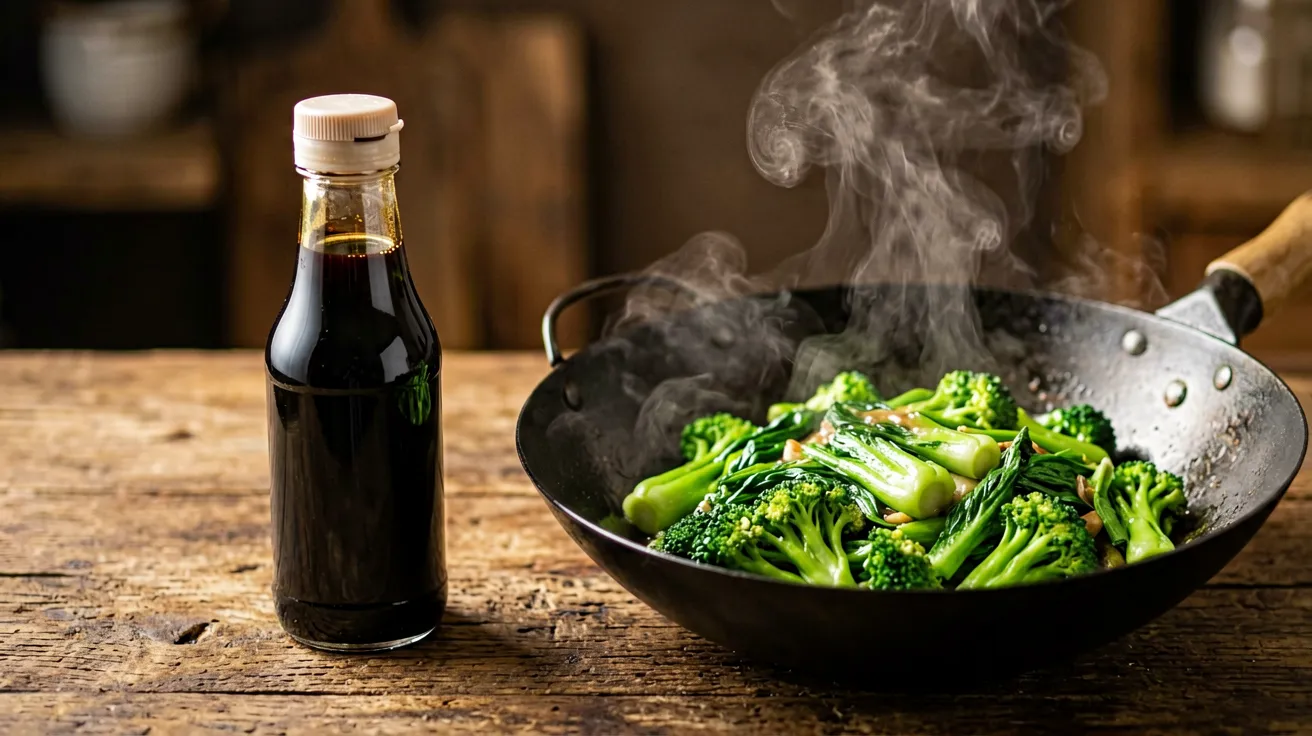
1. The 30-Second Vegetable Finish. This is the most important technique. Stir-fry your vegetables (gai lan, bok choy, broccoli, whatever) with garlic, salt, and a splash of Shaoxing wine. When the vegetables are 95% done — still bright green, still slightly crisp — kill the heat. Add 1 tablespoon of oyster sauce. Toss once. The residual heat will melt the sauce into a glossy coating without burning the sugars. Serve immediately. Total time from fridge to table: about 6 minutes.
2. The Three-Minute Gai Lan. Blanch gai lan in boiling water for 90 seconds — just until the stems are tender but still have a slight snap. Drain. Arrange on a plate. Mix 1 tablespoon oyster sauce with 1 tablespoon hot water (this thins it enough to drizzle) and 3 drops of sesame oil. Pour over the gai lan. That's it. No wok. No oil. Three ingredients, three minutes, tastes like something you'd pay $68 HKD for at a dim sum restaurant.
3. The Fried Rice Secret. Most fried rice recipes tell you to use soy sauce. Soy sauce alone makes fried rice salty and brown. Replace half the soy sauce with oyster sauce — for a single serving, use 1 teaspoon light soy + 1 teaspoon oyster sauce — and the fried rice develops a glossy, savory-sweet character that tastes closer to takeout. The oyster sauce also helps the rice grains separate, because the sugars create a microscopically thin coating that prevents clumping.
4. The Marinade Amplifier. Oyster sauce in a marinade does two things that soy sauce alone cannot: it adds viscosity (which helps the marinade cling to the meat) and it adds sugar (which caramelizes during cooking, creating a deeper brown crust). My standard chicken marinade: 1 tablespoon oyster sauce, 1 teaspoon light soy, 1 teaspoon Shaoxing wine, 1 teaspoon cornstarch. Marinate for 15 minutes. The cornstarch and oyster sauce together create a velveting effect — the chicken stays tender and develops a beautiful golden sear.
5. The Dipping Sauce Hack. Mix equal parts oyster sauce and light soy sauce. Add a drop of sesame oil and a pinch of white pepper. This is the "house sauce" that many Cantonese restaurants serve with steamed vegetables and plain rice. It takes 30 seconds to make and improves almost everything it touches.
The Heat Problem — Why Timing Matters
Oyster sauce contains sugar — about 15-20% by weight. Sugar burns at approximately 170°C. A hot wok on a gas burner can reach 300-400°C. If you add oyster sauce to a wok that's above 170°C and leave it there for more than about 20 seconds, the sugars will caramelize, then burn. Burnt sugar tastes bitter, acrid, and irreversibly unpleasant. It will taint everything in the pan.
I learned this on a Wednesday night in February. I was making beef chow fun — the wide rice noodles with beef and bean sprouts. I added the oyster sauce with the noodles, tossed everything together over high heat for about a minute, and plated it. The first bite was bitter. Not "a little off." Bitter like burnt coffee grounds. My wife took one bite and pushed the plate away. I had burned the sugar in the oyster sauce, and the bitterness had infused the entire dish.
The fix: oyster sauce goes in at the end, after the heat is off, or at most in the final 15 seconds of cooking over low heat. The residual heat of the pan — which will be around 120-150°C after you kill the burner — is hot enough to melt and integrate the sauce without crossing the sugar's caramelization threshold. If you must add it during active cooking, keep the heat at medium, add the sauce, toss for no more than 10 seconds, and remove from heat immediately.
Common Mistakes
Adding oyster sauce at the beginning of cooking. The sugars burn. The dish turns bitter. This is the single most common oyster sauce error. Treat it like a finishing sauce, not a cooking sauce.
Using too much. Oyster sauce is concentrated. One tablespoon is enough for a two-person vegetable stir-fry. Two tablespoons and the dish tastes like sweetened oyster extract instead of food. Start small.
Storing it incorrectly. Oyster sauce should be refrigerated after opening. It contains protein (oyster extract) and sugar — a perfect growth medium for mold. I once left a jar in my Hong Kong cupboard for three weeks in July. When I opened it, a fuzzy gray colony had formed on the surface. Refrigeration prevents this. The sauce will thicken slightly in the cold — that's normal. It will return to pouring consistency after 5 minutes at room temperature.
Confusing oyster sauce with hoisin sauce. They look similar in the jar — dark brown, thick, glossy. They taste completely different. Oyster sauce is savory-umami with a hint of sweetness. Hoisin sauce is sweet-spicy with a hint of umami. They are not interchangeable. Using hoisin when a recipe calls for oyster will make your dish taste like sweet barbecue. Using oyster when a recipe calls for hoisin will make it taste like savory seafood. They serve different gods.
FAQ
Q: What's the difference between oyster sauce and fish sauce? Oyster sauce is thick, sweet-savory, and used primarily as a finishing glaze. Fish sauce is thin, intensely salty-umami, and used as a cooking seasoning. Oyster sauce adds gloss and body. Fish sauce adds depth. You can use both in the same dish — I often add fish sauce early (for umami foundation) and oyster sauce late (for finish and gloss).
Q: Is there a vegetarian oyster sauce? Yes — "vegetarian oyster sauce" or "mushroom oyster sauce" is made from shiitake mushrooms instead of oysters. The flavor is different — earthier, less briny — but the texture and umami function are similar. Lee Kum Kee makes a vegetarian version with a green label. I keep a bottle for cooking for vegetarian friends. It's not the same as real oyster sauce, but it's the closest substitute available. For the full picture of what works when you're out of the real thing, I tested six alternatives side by side — see the oyster sauce substitutes guide with compatibility scores and heat behavior for each.
Q: Can I use oyster sauce in non-Chinese cooking? Yes. Oyster sauce works anywhere you want savory depth and a glossy finish. I've used it in pasta sauce (a teaspoon adds umami without identifiably tasting "Chinese"), in gravy (the viscosity helps with mouthfeel), and even in a bloody mary (don't knock it until you've tried it). The key is restraint — you want the dish to taste better, not to taste like oyster sauce.
Q: How long does oyster sauce last? Refrigerated: about 6-12 months after opening. The quality degrades slowly — the flavor becomes flatter and less complex over time, but it won't spoil in a food-safety sense as long as it's refrigerated. Unrefrigerated: maybe a month in cool weather, a week in a Hong Kong summer. The sugar and protein content makes it susceptible to mold in warm conditions.
Q: Why does my oyster sauce have a dark ring around the cap? That's caramelized sugar that has dried and oxidized at the bottle opening. It's harmless. Wipe the cap and rim with a damp cloth before closing to prevent buildup. If the ring is thick and crusty, the sauce underneath is still fine — the oxidation only affects the exposed surface.
理论基础 / The Science Behind It
Oyster sauce was born from a happy fermentation accident — Lee Kum Sheung's overcooked oyster soup reducing into a savory concentrate that became a Cantonese cornerstone. The fifth taste explained — oyster sauce is one of the purest expressions of umami in Chinese cooking, delivering inosinate that amplifies glutamate from other ingredients by up to 8x.
→ 发酵势在必行 / The Fermentation Imperative
The umami synergy between oyster sauce's inosinate and other glutamate sources is a perfect example of food domain knowledge transforming good cooking into great cooking.
⚠️ Common Mistakes
- • Problems with Oyster Sauce — I Burned It Three Times Before I Learned How to Use It Properly? Diagnose the issue ->
Application
Best Uses
Best Used For
- + stir-fry finishing
- + vegetable dishes
- + noodle coating
- + dim sum dipping
Avoid Using It For
- x high-heat searing (burns easily)
Pairings
Pairs Well With
Dishes
Dishes That Use This
- Lo Mein
Shelf Reading
How to Spot It
Use these shelf cues to identify the right bottle, jar, or bag before you ruin dinner with the wrong one.
Liquid Color
thick dark brown paste
Bottle / Form
wide glass jar or squeeze bottle
Label Clue
Lee Kum Kee: red cap, woman and child in boat logo
Shopping Clue
Very thick — spoon stands up in it
Cap Color
red cap is iconic (Lee Kum Kee)
Labels
Chinese Label Cues
Substitutes
Emergency Replacements
If It Failed
If the Swap Went Wrong
Buying Guide
Best Brands to Look For
Lee Kum Kee
Premium Oyster Sauce | global
Mae Krua
Oyster Sauce | Thailand/Asia
Memory Hook
Label Memory Trick
What to remember
Lee Kum Kee: red cap, woman and child in boat logo
Related
Related Ingredients
Tools
Useful Tools
Worth Reading
Go Deeper On This Flavor
Next Step
Continue the Flavor Trail
Continue from this ingredient into the broader flavor cluster, a substitution decision, or a failure diagnosis.
Written by Mike Sang
Digital strategist, fermentation science enthusiast, and student of the Tao. Bridging growth engineering with ancient Chinese food wisdom.
Seasonal Context
Flavor changes with the season. Your cooking should too.
Missing Umami is part of The Way of Nature, a living system connecting food, timing, and seasonal practice.