tofu
Silken Tofu — When the Most Delicate Tofu Is Actually the Right Choice
Silken tofu will never survive a stir-fry. But in the right dish — cold, steamed, or gently simmered — it's irreplaceable. I learned this the hard way, one shattered block at a time.
Flavor Snapshot
0–100Six sensory dimensions, scored against the flavor reference for this ingredient.
Season Spring
Related Ingredients 2
Flavor Notes
Quick Facts
Chinese Name
嫩豆腐
Category
tofu
Texture / Body
Dry / N/A
Liquid Color
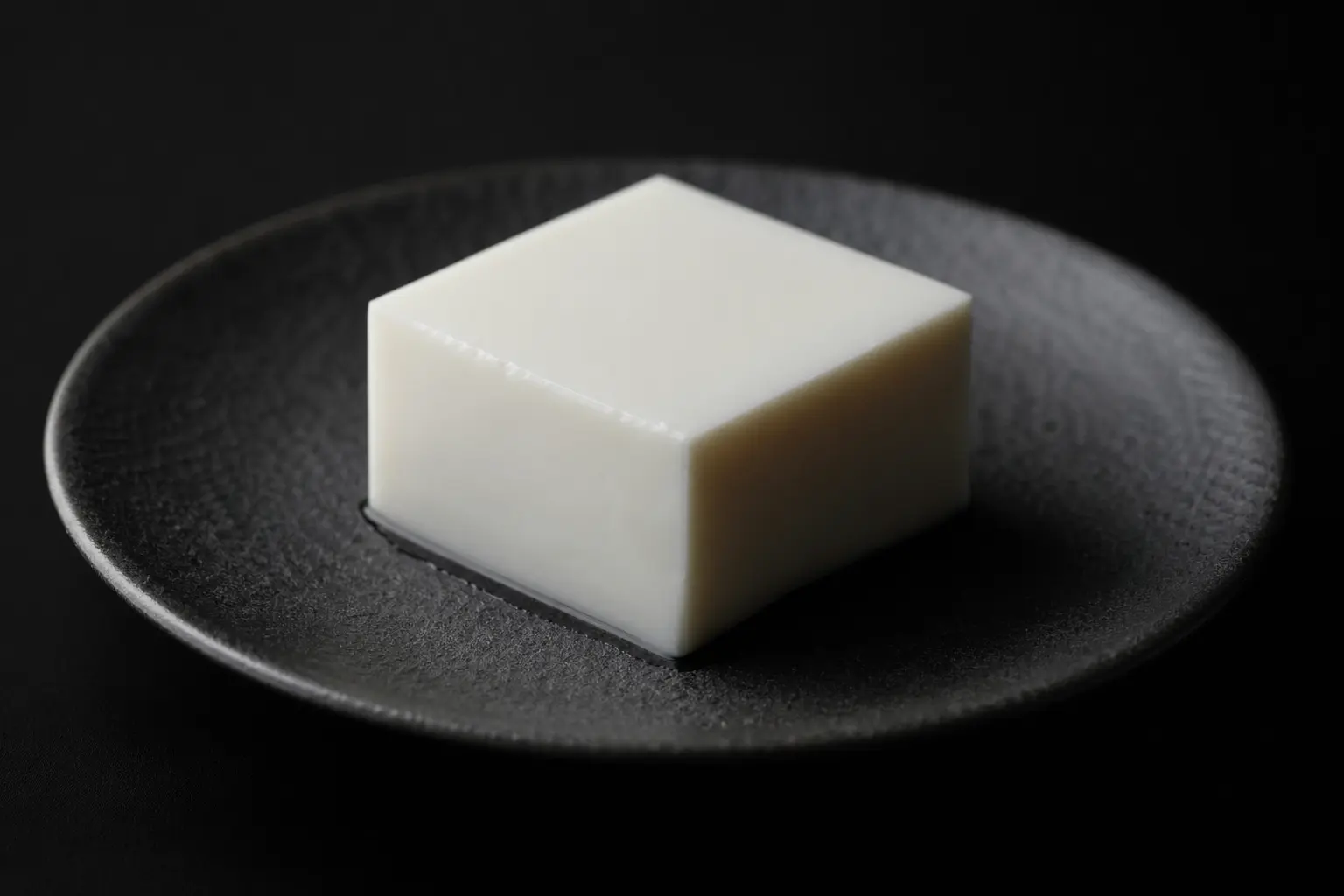
pure white, custard-like
Shopping Clue
Trembles when moved — like a savory panna cotta. 87% water content.
Salt Level
Definition
What It Is
If your recipe involves a spatula, heat, and movement, silken tofu is the wrong choice. I know this because I've watched it disintegrate in my wok three separate times, each failure more humiliating than the last.
But if your dish is cold, steamed, or served in a bowl — silken tofu is not just acceptable. It's the only correct choice. Firm tofu in hiyayakko tastes like a pencil eraser. I've served both versions at the same dinner, and the difference silenced the table.
The best silken tofu dish I've ever made required zero cooking. I opened a package, slid the tofu onto a plate, drizzled soy sauce and sesame oil over it, and topped it with scallions and bonito flakes. Total active time: 90 seconds. It was better than the braised tofu I'd spent two hours on the night before.
Silken tofu is not "undercooked firm tofu." It's a different product made through a different process for different purposes. Treating it as a softer version of firm tofu is like treating a poached egg as an undercooked fried egg. Same ingredient family, completely different destination.
The temperature at which you serve silken tofu changes everything. Cold silken tofu with soy sauce is refreshing on a humid Hong Kong summer day. Warm silken tofu in miso soup is comforting on a damp winter evening. Hot silken tofu straight into a stir-fry is a disaster — the thermal shock creates micro-fractures throughout the protein structure and the block literally crumbles into the sauce.
My first encounter with silken tofu was not in a kitchen. It was at a tiny shabu-shabu restaurant in Causeway Bay, 2019. The server brought a plate of something that looked like a white jellyfish — trembling, quivering, almost translucent at the edges. She slid it into the bubbling broth with a pair of long chopsticks, and 45 seconds later, she retrieved a piece that had transformed. It was no longer trembling. It was firm but yielding, coated in the kombu-dashi broth, with a texture that I can only describe as "a cloud that learned to stand up."
I went home and bought a block of silken tofu from the Wellcome downstairs. I treated it exactly like the firm tofu I'd been stir-frying for months. I pressed it (bad idea — it collapsed under the weight of a single can of tomatoes). I cubed it (half the cubes crumbled at the edges). I put it into hot oil (the oil erupted with steam as the 87% water content hit 200°C, and every single cube disintegrated into a beige slurry within 40 seconds).
I stood there, staring at the wreckage in my wok, and said out loud: "What the hell is this stuff actually for?"
The Answer: Three Dishes Where Silken Tofu Wins
It took me a year of occasional experiments, including a memorable failure where I tried to deep-fry silken tofu coated in panko (don't — the water content is too high, the center never cooks before the outside burns), to understand that silken tofu has exactly three domains of excellence:
1. Cold Dishes
This is where silken tofu was born to shine. In August, when Hong Kong humidity hits 95% and the thought of standing over a hot wok makes me want to crawl into the refrigerator, a block of cold silken tofu is the fastest, most satisfying dinner I know.
Here is exactly what I do: take the tofu out of the fridge. Do not press it, do not drain it aggressively — just tip out the water from the package. Use a thin, sharp knife to score the tofu into 2cm squares while it's still in the package. Invert the package onto a shallow bowl — the scored block should slide out intact 80% of the time. (The other 20% of the time, it cracks and I call it "rustic presentation.")
Drizzle 1 tablespoon of light soy sauce (Lee Kum Kee green cap) and 1 teaspoon of sesame oil (the dark, toasted kind from the wet market, not the pale supermarket version) over the tofu. Top with finely sliced scallions — the green parts only, sliced on a sharp diagonal for maximum surface area. If I have them, I add a small handful of bonito flakes (katsuobushi), which dance and curl in the warmth of the tofu. If I don't, a sprinkle of toasted sesame seeds works.
Total time from fridge to table: under 3 minutes. Calories: about 120. Satisfaction level: higher than most dishes I've spent an hour on. The cold temperature amplifies the silky texture — warm silken tofu is soft, but cold silken tofu is something else entirely, almost like a savory panna cotta. The soy sauce hits the tongue first with salt, then the sesame oil rolls in with its nutty, toasty depth, and finally the scallions cut through with a sharp, green freshness that cleans the palate.
2. Steamed Dishes
Steaming silken tofu is the gentlest way to heat it. I learned the technique from a YouTube video of a Hong Kong dai pai dong chef who was preparing steamed tofu with minced pork in a bamboo steamer. The key insight: steam the tofu first for 5 minutes to warm it through and firm up the exterior, then add the toppings and steam for another 3-4 minutes. If you add the toppings at the start, the weight of the pork crushes the tofu before it has a chance to set.
My go-to steamed silken tofu: place the whole block on a heatproof plate, steam for 5 minutes over boiling water (bamboo steamer or metal, doesn't matter — but if you use metal, put a chopstick under the lid to let steam escape so condensation doesn't drip onto the tofu). Pour off any water that has accumulated on the plate. Top with a mixture of 100g minced pork, 1 teaspoon light soy, 1 teaspoon Shaoxing wine, 1/2 teaspoon cornstarch, and a pinch of white pepper. Steam for another 4 minutes. Finish with a drizzle of hot oil mixed with sliced scallions and julienned ginger poured over the top — you'll hear that sharp sizzle as the hot oil hits the cold scallions. That sound means it worked.
3. Soups and Gentle Simmering
Silken tofu in soup is the single most forgiving application — as long as you don't stir aggressively. Cut the tofu into 2cm cubes. Slide them into a gently simmering (not boiling) broth. Let them warm through for 2-3 minutes. Serve with a ladle, not a slotted spoon — the ladle supports the cube from underneath.
I make a quick version of hot and sour soup on weeknights: 500ml chicken stock, 1 tablespoon black vinegar, 1 teaspoon light soy, 1/2 teaspoon white pepper, a beaten egg drizzled in slowly while stirring, and half a block of silken tofu cubed. The tofu absorbs the sour-spicy broth and releases a clean, creamy contrast to the sharp vinegar. Firm tofu in this soup would feel like chewing on erasers between sips of broth. Silken tofu melts into the soup like it belongs there — because it does.
The Thermal Shock Problem — and Why It Matters
Here is the science I wish I'd understood before attempt number one: silken tofu contains approximately 87% water. When a cube of cold silken tofu hits 200°C oil, that water flash-boils from the outside in. The steam expansion creates internal pressure that fractures the protein matrix — the soy protein strands that hold the tofu together literally tear apart. This is why silken tofu doesn't just "break" in a stir-fry. It disintegrates at a structural level.
Medium-firm tofu has about 75% water — enough less that the protein matrix can withstand the steam pressure during brief high-heat cooking. Firm tofu at 60% water is structurally robust enough for extended frying and flipping. The water content is not just a texture difference — it's a physics constraint that determines what cooking methods are physically possible.
I tested this systematically: I cubed identical 2cm pieces of silken, medium-firm, and firm tofu. I dropped them one at a time into 180°C oil. The silken cube disintegrated in 8 seconds. The medium-firm cube held its shape for about 30 seconds before developing cracks. The firm cube was still intact when I fished it out after 2 minutes, golden and crisp. Same oil, same temperature, same size — completely different outcomes, determined entirely by water content.
Common Mistakes
Using silken tofu for any dish that involves flipping or stirring. If the recipe says "stir-fry," "pan-fry," or "saute," reach for medium-firm or firm. Silken tofu cannot survive spatula contact with heat. I have the sad, soupy evidence to prove it.
Pressing silken tofu. Don't. The protein structure is too delicate. Even light pressure will crack the block. If you need to remove excess water, wrap the block gently in a clean kitchen towel and let it sit for 5 minutes. No weight. No pressing. Just passive absorption.
Boiling silken tofu. Rapid boiling creates turbulence that breaks the cubes apart. Keep soups and braises at a gentle simmer — you should see occasional bubbles, not a rolling boil. If you can hear the pot from the next room, it's too hot.
Serving silken tofu straight from the fridge without draining. The packing liquid has a slightly metallic, processed taste. Always drain and give the block a brief rinse under cold running water — 5 seconds is enough. Pat dry with a paper towel before plating.
FAQ
Q: What's the actual difference between silken and firm tofu? Silken tofu is made by coagulating soy milk without pressing — the curds form into a single, delicate block that retains nearly all the original water. Firm tofu is made by pressing the curds to expel water, creating a denser, more resilient structure. They're made differently for different purposes. The Japanese call silken tofu "kinugoshi" and firm tofu "momen" — "cotton-strained," named for the cloth used in pressing. That naming difference tells you everything.
Q: Which brands do you buy in Hong Kong? For cold dishes: Mori-Nu Silken (the blue box, shelf-stable — surprisingly good despite being shelf-stable). For steaming: whatever the wet market has that morning. For soup: the House Foods "Soft" (different from "Silken" — it's slightly firmer and holds up better in broth).
Q: Why did my silken tofu turn watery on the plate? You didn't drain it. Silken tofu continuously weeps water — even after you plate it. Drain for at least 10 minutes before serving cold dishes, and pour off any accumulated liquid on the plate before adding sauce.
Q: Can I freeze silken tofu? Technically yes, but the texture change is extreme. Frozen-then-thawed silken tofu becomes spongy and porous — it's actually closer to medium-firm in texture. This can be useful if you want the absorption properties of frozen tofu but are starting with silken, but don't expect it to behave like fresh silken after freezing.
理论基础 / The Science Behind It
Silken tofu's 87% water content is a deliberate product of the tofu-making process within the food system, designed for specific applications.
The thermal shock that destroys silken tofu in a hot wok teaches us about the physics of ingredient interactions.
⚠️ Common Mistakes
- • Problems with Silken Tofu — When the Most Delicate Tofu Is Actually the Right Choice? Diagnose the issue ->
Application
Best Uses
Best Used For
- + cold tofu salads
- + steamed dishes
- + soups and gentle simmering
- + mapo tofu (non-stir version)
Avoid Using It For
- x stir-frying
- x deep-frying
- x pan-searing
- x any high-heat flipping
Pairings
Pairs Well With
Dishes
Dishes That Use This
- Mapo Tofu
- Hot And Sour Soup
Shelf Reading
How to Spot It
Use these shelf cues to identify the right bottle, jar, or bag before you ruin dinner with the wrong one.
Liquid Color
pure white, custard-like
Bottle / Form
rectangular cardboard box (Mori-Nu) or plastic tub submerged in water
Label Clue
Look for 'Silken' or 'Soft' on the label; Mori-Nu blue box is shelf-stable
Shopping Clue
Trembles when moved — like a savory panna cotta. 87% water content.
Cap Color
n/a (sold in rectangular aseptic boxes or chilled tubs)
Labels
Chinese Label Cues
Substitutes
Emergency Replacements
Status
No dedicated substitute article is loaded for this ingredient yet.
If It Failed
If the Swap Went Wrong
Buying Guide
Best Brands to Look For
Mori-Nu
Silken Tofu (blue box) | global
House Foods
Soft Tofu | US/global
Memory Hook
Label Memory Trick
What to remember
Look for 'Silken' or 'Soft' on the label; Mori-Nu blue box is shelf-stable
Related
Related Ingredients
Tools
Useful Tools
Worth Reading
Go Deeper On This Flavor
Next Step
Continue the Flavor Trail
Continue from this ingredient into the broader flavor cluster, a substitution decision, or a failure diagnosis.
Written by Mike Sang
Digital strategist, fermentation science enthusiast, and student of the Tao. Bridging growth engineering with ancient Chinese food wisdom.
Seasonal Context
Flavor changes with the season. Your cooking should too.
Missing Umami is part of The Way of Nature, a living system connecting food, timing, and seasonal practice.