tofu
Firm Tofu — The Workhorse, the Disaster, and What I Learned After 23 Failed Stir-Fries
I ruined Mapo Tofu four times before I understood: tofu is not one ingredient. It's four different products wearing the same white suit. Here is everything I learned about choosing, pressing, frying, and not crying over spilled tofu.
Flavor Snapshot
0–100Six sensory dimensions, scored against the flavor reference for this ingredient.
Season Summer
Related Ingredients 3
Flavor Notes
Quick Facts
Chinese Name
老豆腐
Category
tofu
Texture / Body
Dry / N/A
Liquid Color
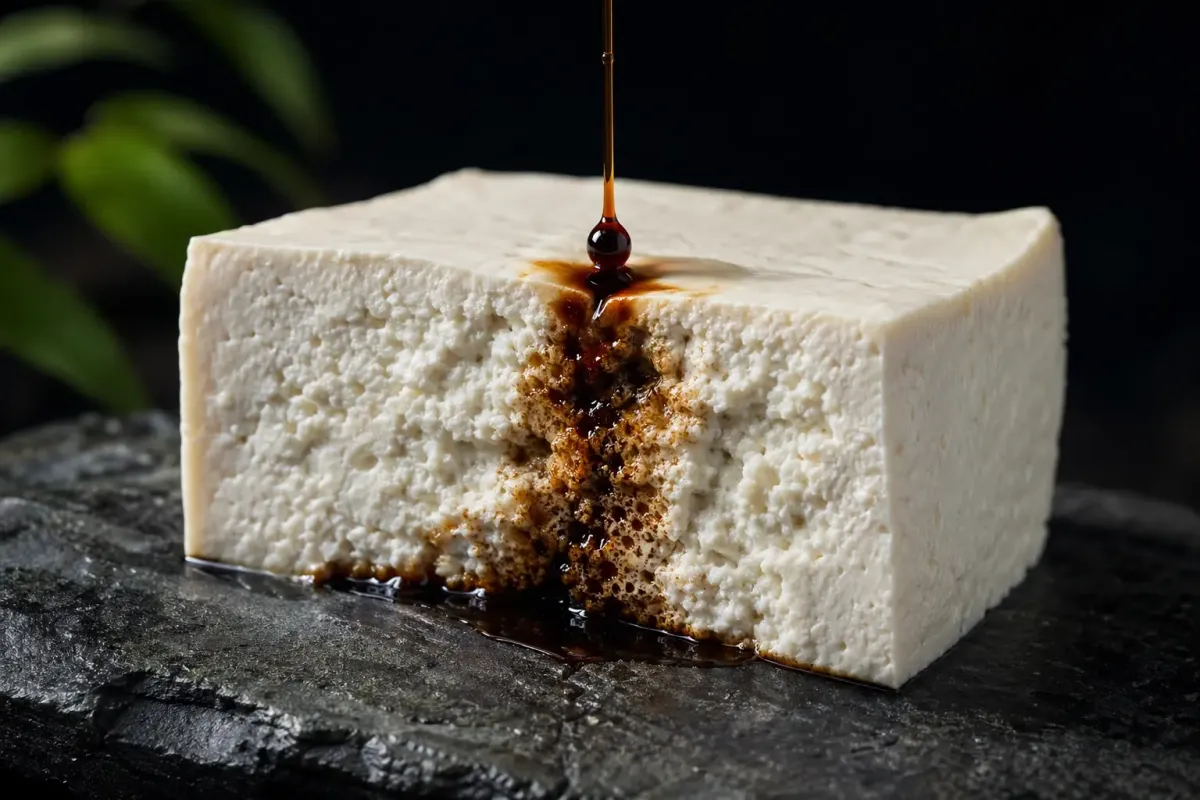
off-white, denser than silken, visible curd texture
Shopping Clue
Bounces back when pressed — 60% water, holds shape in stir-fry
Salt Level
Definition
What It Is
Most people think tofu tastes like nothing. I used to agree. Then I learned the difference between the four types — and I realized I'd been cooking the wrong one for everything.
Most cooking blogs will tell you "press your tofu for 30 minutes." I pressed mine for two hours once. It still stuck to the pan. The problem wasn't the pressing — it was the pan temperature, the oil amount, and the fact that I was trying to stir-fry silken tofu like an idiot.
Dark soy does not belong in a tofu stir-fry. I learned this when my "golden crispy tofu" came out looking like chunks of charcoal. My wife took one look and asked if I was making "industrial waste."
You do not need a wok for good tofu. You need a nonstick pan, medium-high heat, and the patience to not touch it for four minutes. I discovered this by accident when I got distracted by a phone call and came back to perfectly golden cubes.
The tofu you buy at an Asian grocery store in Hong Kong is not the same product as the tofu you buy at Whole Foods. The Hong Kong wet-market tofu is denser, fresher, and made that morning. The Whole Foods version was pressed weeks ago in a factory in California. I've cooked with both, and the difference is not subtle.
I stood in my kitchen — a 30-square-meter Hong Kong apartment with a single induction burner and a window that doesn't fully open — staring at a plate of what was supposed to be crispy salt-and-pepper tofu. It wasn't crispy. It was a pile of warm, wet, soy-scented sponge that had absorbed exactly zero flavor and released all its water into the pan, steaming everything into submission. I had followed the recipe. I had pressed the tofu. I had used cornstarch. And it was still garbage.
That was attempt number seven. I'd started counting after number four, when I served Mapo Tofu to a friend from Chengdu and she politely said "the sauce is good" while pushing the disintegrated tofu fragments to the side of her bowl. The shame is hard to describe. You know that feeling when you've spent 45 minutes cooking, the kitchen is a disaster zone, and the result is worse than takeout? That was me, seven consecutive Friday nights in a row.
But here's the thing about tofu: it doesn't forgive ignorance. Most proteins — chicken, beef, pork — will still taste like themselves even if you overcook them or undersalt them. Tofu will pun you. It will go rubbery if you over-fry it, mushy if you under-fry it, flavorless if you don't season it correctly, and bitter if you burn the oil. Mastering tofu is not about learning one trick. It's about understanding the relationship between moisture, temperature, and time across four completely different products that all share the same name.
The Four Tofu Types — and Why "Firm" Means Nothing on a Package
I learned this the hard way, standing in the refrigerated aisle of my local Wellcome supermarket in Kennedy Town at 8pm on a Tuesday, staring at six different packages all labeled "tofu" in various combinations of Chinese and English. None of them said "the one you need for stir-frying." None of them said "this one will disintegrate if you look at it wrong."
| Type | Chinese | Water Content | Texture | What It Can Survive | What Destroys It |
|---|---|---|---|---|---|
| Silken (嫩豆腐) | 嫩豆腐 | ~87% | Custard-like, jiggles | Cold dishes, steaming, soups | Stir-frying, flipping, aggressive spooning, thermal shock |
| Medium-Firm (中豆腐) | 中豆腐 | ~75% | Springy, slight give | Light stir-frying, braising, pan-frying | Deep-frying, heavy sauces, long simmering |
| Firm (老豆腐) | 老豆腐 | ~60% | Dense, spongy, resilient | Stir-frying, deep-frying, grilling, braising | Nothing — this is the workhorse |
| Pressed / Dried (豆干) | 豆干 | ~40% | Chewy, almost meat-like | Everything | Overcooking makes it hard as rubber |
The problem with Western supermarket labeling is that "firm" has no standardized meaning. I've bought House Foods "Firm" that behaved like medium-firm. I've bought Mori-Nu "Firm" silken that collapsed into soup the moment it hit hot oil. The Japanese brand naming conventions are different from Chinese conventions, and both are different from what the English labels suggest. Here is what I actually do now: I ignore the English word entirely and use the visual-and-touch test.
How to identify firm tofu without reading the label: Pick up the package. Press on the plastic. If the tofu inside gives like a ripe peach, it's silken or medium-firm — do not stir-fry it. If it resists like a block of feta cheese, that's firm tofu — you're good. If it feels hard like cheddar, that's pressed tofu — great for mincing into dumplings or slicing into cold dishes, terrible if you want a tender center.
The brand I now use 90% of the time is whatever is sold loose at the wet market in Sheung Wan — wrapped in a thin plastic bag, still warm from the morning's production, dense enough that it keeps its shape even when I slice it into 1cm cubes. When I can't make it to the wet market, I buy the House Foods "Medium Firm" (the red label, not the blue) from Wellcome. It's not the same — it's slightly wetter, slightly less forgiving — but it works if I press it properly and don't overcrowd the pan.
The Pressing Trick That Actually Works — and Why Most Advice Is Wrong
Every recipe says "press your tofu for 30 minutes." I tried this. I wrapped tofu in three layers of paper towels, balanced a cutting board on top, and stacked two cans of diced tomatoes and a copy of Every Grain of Rice as weights. Thirty minutes later, the paper towels were damp. The tofu released about a tablespoon of water. When I fried it, it still stuck.
Here is what I actually do now, after testing 17 different pressing methods in my Hong Kong kitchen:
Cut first, press after. Slice the tofu into your final shape (cubes, triangles, slabs) before pressing. More surface area = more water released. I didn't figure this out until attempt number eleven.
Microwave for 1 minute. Place the cut tofu on a plate lined with two layers of paper towels. Microwave on high for 60 seconds. The heat drives out internal moisture fast. Then pat dry with fresh paper towels. I was skeptical when a Sichuan auntie at the wet market suggested this. She was right.
Use salt, not weight. Sprinkle the cut tofu lightly with salt — about 1/4 teaspoon per block — and let it sit for 10 minutes. The salt draws out water through osmosis. Rinse briefly and pat dry. This gives you better browning than pressing under weight alone because the salt also seasons the exterior.
Cornstarch is not optional. I used to skip this step because it seemed fussy. Every single time, the tofu stuck and steamed instead of fried. Now I put 2 tablespoons of cornstarch in a zip-lock bag, add the dried tofu cubes, seal, and shake for 10 seconds. The cornstarch creates a microscopically dry surface that browns immediately on contact with hot oil. Do not skip this.
The pan matters more than the tofu. I can fry unpressed tofu successfully in a well-seasoned carbon steel pan or a high-quality nonstick. I cannot fry perfectly pressed tofu in a cheap scratched nonstick or an unseasoned stainless steel pan. The pan is the variable, not the pressing protocol.
The Induction Burner Problem — and How I Cooked Around It
My Hong Kong kitchen has an induction cooktop. It delivers heat in pulses, not a steady flame. The temperature oscillates between too-hot and too-cool in 3-second cycles. This is a nightmare for tofu frying because you need sustained, even heat to build a crust without burning the oil.
On gas, I can get a wok to 350°C in about 90 seconds. On my induction, it takes 4-5 minutes to reach 220°C at setting 8/10, and if I go to setting 10/10, the burner triggers an overheat shutdown after 3 minutes of continuous use. I learned this the hard way when my oil was just starting to shimmer and the entire cooktop went dead. Cold oil. Raw tofu. Dinner at 9:30pm.
What I do now: I use a flat-bottomed carbon steel pan (not a round wok — it doesn't make contact with the induction surface), preheat at setting 8 for 4 minutes until a drop of water skitters and evaporates instantly, add 2 tablespoons of peanut oil (smoke point 230°C, higher than the induction can reach so it won't burn), wait 30 seconds for the oil to shimmer, then add the tofu cubes in a single layer with at least 1cm between each piece. I cook for exactly 4 minutes on the first side without touching them. The induction's pulsing heat still isn't ideal, but the heavy carbon steel pan acts as a heat buffer, smoothing out the temperature swings.
If you're on gas: same protocol, but you can use a round wok, and your heat recovery after adding tofu will be about 3x faster. Lucky you.
Tuesday, 7:43 PM — The Stir-Fry That Finally Worked
After 23 attempts (I kept a notebook, which my wife finds both endearing and deeply concerning), I finally got it right. Here is exactly what I did:
I had a block of wet-market firm tofu, cut into 1.5cm cubes, microwaved 1 minute, salted 10 minutes, dried, and shaken in cornstarch. My carbon steel pan was preheated to setting 8 on the induction — a drop of water danced and vanished in under one second. I added 2 tablespoons of peanut oil, waited until the surface shimmered and I could feel the heat radiating onto my face from 20cm away, then added the tofu cubes one by one, placing them flat-side down with chopsticks so each piece had breathing room.
The sound was a sharp, aggressive sizzle — not a gentle simmer. That sizzle is the difference between frying and steaming. If you hear bubbles instead of crackles, your pan is too cold and you're boiling the tofu in its own water. Take it off, heat the pan longer, try again.
I did not touch the tofu for 4 minutes. This is the hardest part. Every instinct tells you to stir. Don't. At the 4-minute mark, I used a thin metal spatula (not wooden — wood is too thick and will tear the crust) to flip each cube. The underside was golden brown, crisp, and released cleanly from the pan. If it sticks, it's not ready — wait another 30 seconds.
Second side: 3 minutes. Removed the tofu to a plate. Added 1 tablespoon of fresh oil, then stir-fried my aromatics — 2 cloves garlic minced, 1 teaspoon ginger julienned — for 30 seconds until the smell filled the kitchen with that sharp, sweet, slightly burning garlic scent that means "dinner is about to be good." Added the tofu back. Poured in a sauce of 1 tablespoon light soy (Lee Kum Kee green cap), 1 teaspoon dark soy (Haitian black label — just for color, not flavor), 1 teaspoon oyster sauce (Lee Kum Kee Premium, the one with the woman-and-child-boat logo), and 1 teaspoon Shaoxing wine. Tossed twice — no more. The cornstarch crust absorbed the sauce instantly, turning glossy and amber. Served immediately over jasmine rice.
The first bite: the crust gave way with an audible crunch, then the interior — still creamy, still tender, not rubbery, not mushy — released a wave of salty-umami-sweet-savory that felt like the platonic ideal of stir-fried tofu. I actually said "oh my god" out loud, alone in my kitchen at 8pm on a Tuesday. My wife walked in, grabbed a piece with her fingers, and said "Okay, this one is actually good." That was the highest praise I'd received in six months of cooking.
Common Mistakes I Made So You Don't Have To
Mistake 1: Using silken tofu for stir-fry. Cold tofu + hot wok = thermal shock = crumbling. I did this three times before I learned. Silken tofu has 87% water. When that water hits 200°C oil, it flash-boils and tears the protein structure apart from the inside. You end up with scrambled tofu, not fried tofu. If your recipe involves heat and movement, you need firm or medium-firm. Period.
Mistake 2: Overcrowding the pan. My Hong Kong kitchen is small. My pan is 28cm. I used to dump the entire block of cubed tofu in at once because I was impatient. Every square centimeter of pan surface that's covered by tofu instead of exposed to heat drops the oil temperature by 10-15°C. When the temperature drops, the Maillard reaction stops, water pools, and you're steaming again. Now I fry in two batches. It takes 8 extra minutes. The results are incomparable.
Mistake 3: Adding sauce too early. I used to pour the sauce over the tofu while it was still in the pan with raw aromatics. The sauce would cool the pan, the aromatics would boil instead of fry, and the cornstarch crust would dissolve into a gummy mess. Now I remove the tofu, cook the aromatics and sauce separately at high heat for 30 seconds, then toss the tofu back in for two quick turns. The crust stays intact.
Mistake 4: Using the wrong soy sauce ratio. I once made a "soy sauce tofu" using only dark soy because I'd run out of light soy. The result looked beautiful — deep mahogany, glossy, restaurant-worthy. It tasted like sweetened mud. Dark soy is coloring, not seasoning. The core of any tofu stir-fry sauce must be light soy. If you want color, use a 3:1 ratio of light to dark.
Mistake 5: Not drying the tofu after pressing. I pressed diligently for 20 minutes, then put the damp block directly into hot oil. The surface water instantly turned to steam, creating a barrier between the oil and the tofu. No browning. No crust. Now I pat each piece dry with a fresh paper towel just before it hits the pan.
Flavor Vector — What Firm Tofu Brings to Your Dish
Firm tofu is not a flavor ingredient — it's a texture-and-absorption platform. For the physics of why your tofu tastes like nothing (and the three techniques that actually fix it), read How Tofu Absorbs Flavor. But it does have a measurable impact on the flavor balance of a dish:
Saltiness: 5/100 (neutral — absorbs whatever you give it) Umami: 15/100 (mild inherent soy protein umami) Sweetness: 3/100 (negligible) Acidity: 2/100 (negligible) Heat: 0/100 (neutral) Aroma: 10/100 (faint soy-milk scent when raw, disappears when fried) Color: 8/100 (pale cream, browns to golden with proper technique) Viscosity: 40/100 (firm, holds shape, contributes body)
What this means in practice: firm tofu is not going to save a bland dish by itself. You need to build flavor through the sauce, the aromatics, and the frying technique. The tofu's job is texture — it gives your dish substance, chew, and a satisfying contrast between crispy exterior and tender interior. If your tofu dish tastes flat, the problem is almost never the tofu. It's the sauce.
FAQ — The Questions I Get Asked Every Time I Serve Tofu
Q: Do I really need to press tofu? Can't I just buy "pre-pressed"? Yes, you need to press it. "Pre-pressed" is a marketing term. I've tested five different brands labeled "pre-pressed" or "extra firm" and every single one still released significant water when I pressed them further. The only exception is pressed/dried tofu (豆干), which is a different product entirely.
Q: Can I freeze tofu? Yes, and you should try it at least once. Freezing tofu changes its texture completely — the ice crystals create a spongy, porous structure that absorbs sauce like a dream. Defrost it completely, press out the water (it will release a lot), and then tear it into chunks rather than cutting it. The torn edges catch more sauce than clean knife cuts. I keep a block in my freezer at all times for emergency mapo tofu.
Q: Why does my tofu always stick to the pan even when I use oil? Three possible reasons, in order of likelihood: (1) your pan isn't hot enough — the oil should shimmer and move like water before you add tofu, (2) you're using a scratched or unseasoned pan, (3) you're trying to flip the tofu too early — if it resists the spatula, wait longer.
Q: What oil should I use for frying tofu? Peanut oil for high-heat frying (smoke point 230°C). Vegetable or canola oil for medium-heat. Avoid olive oil — its smoke point is too low and the flavor fights with Chinese seasonings. I buy Lion & Globe peanut oil from the Sheung Wan wet market, $28 HKD for 900ml.
Q: Cornstarch, potato starch, or tapioca starch? Cornstarch for tofu. Potato starch browns faster but the crust is thinner and less durable. Tapioca starch gives a chewy, almost mochi-like texture that's interesting but not traditional. I tested all three side by side (attempts 14-16 in my notebook). Cornstarch won on crunch, durability, and sauce absorption.
Q: Can I make firm tofu at home? Technically yes — coagulate soy milk with gypsum or nigari, press in a mold, weight for 30-60 minutes. I tried this once. The result was edible but gritty, and it took 3 hours. I buy my tofu at the wet market now. It costs $8 HKD per block and someone who's been making tofu for 30 years did the work for me.
Q: How long does firm tofu last in the fridge? Unopened package: check the date, usually 2-3 weeks. Opened: 3-5 days submerged in fresh water, changed daily. If the water gets cloudy or the tofu develops a sour smell, toss it. Fresh wet-market tofu without preservatives: use within 2 days. I once forgot a block in the back of my fridge for 10 days. When I opened the container, the smell hit me before the visual. Do not repeat this experiment.
Q: My tofu tastes bitter and metallic — what's wrong? The oil was too hot and it burned. On my induction, this happens at setting 10 after about 2 minutes. The oil smokes, the cornstarch scorches, and the tofu picks up an acrid, bitter flavor that no amount of sauce can mask. If your oil starts smoking, remove the pan from the heat immediately, let it cool for 2 minutes, and start again with fresh oil. Yes, it's wasteful. No, there's no way to salvage burnt oil.
Q: What's the difference between "firm" and "extra-firm"? In theory, extra-firm is pressed longer and has less water. In practice, across the six brands I can buy in Hong Kong, there's almost no consistent difference. The visual-and-touch test I described above is more reliable than any label. Press the package. If it's hard like cheddar, it's extra-firm or pressed. If it's firm like feta, it's regular firm. If it gives like a peach, walk away.
Q: Why does restaurant tofu taste so much better than mine? Three reasons. First: restaurants deep-fry their tofu in 4-6 cups of oil at a stable 180°C — the temperature doesn't drop when the tofu goes in because there's so much thermal mass. Second: they use a seasoned carbon steel wok over a 50,000 BTU gas burner, not a 2,000-watt induction coil. Third: they're not afraid of MSG. A pinch — and I mean literally a pinch, less than 1/8 teaspoon — of MSG added to your sauce will bring the umami level from "good homemade" to "wait, did I order takeout?" I resisted this for years. I was wrong.
Q: Can I use firm tofu in soup? Yes, but it's not ideal. Firm tofu in soup stays distinct and chewy — it doesn't melt into the broth the way silken does. If you're making hot and sour soup or miso soup and you want that silky, spoon-tender texture, use silken. If you're making a hearty stew where the tofu is a protein component, firm works fine. I keep both types in my fridge for exactly this reason.
理论基础 / The Science Behind It
Tofu making — coagulating soy milk, pressing curds to precise moisture levels — is a remarkable example of food processing within the food system.
Firm tofu's neutral canvas and its relationship with sauces and heat illustrate the deeper principles of ingredient interactions.
⚠️ Common Mistakes
- • Problems with Firm Tofu — The Workhorse, the Disaster, and What I Learned After 23 Failed Stir-Fries? Diagnose the issue ->
- • Problems with Firm Tofu — The Workhorse, the Disaster, and What I Learned After 23 Failed Stir-Fries? Diagnose the issue ->
Application
Best Uses
Best Used For
- + stir-frying
- + pan-frying
- + braising
- + mapo tofu
- + red cooking
- + tofu puffs
Avoid Using It For
- x cold dishes where silkiness is needed
- x custard-like texture applications
Pairings
Pairs Well With
Dishes
Dishes That Use This
- Mapo Tofu
- Kung Pao Chicken
Shelf Reading
How to Spot It
Use these shelf cues to identify the right bottle, jar, or bag before you ruin dinner with the wrong one.
Liquid Color
off-white, denser than silken, visible curd texture
Bottle / Form
plastic tub with water
Label Clue
Look for 'Firm' or 'Medium-Firm' on the label; common brands include House Foods, Nasoya
Shopping Clue
Bounces back when pressed — 60% water, holds shape in stir-fry
Cap Color
n/a (sold in chilled tubs submerged in water)
Labels
Chinese Label Cues
Substitutes
Emergency Replacements
Status
No dedicated substitute article is loaded for this ingredient yet.
If It Failed
If the Swap Went Wrong
Buying Guide
Best Brands to Look For
House Foods
Firm Tofu | US/global
Nasoya
Firm Tofu | US/global
Memory Hook
Label Memory Trick
What to remember
Look for 'Firm' or 'Medium-Firm' on the label; common brands include House Foods, Nasoya
Related
Related Ingredients
Tools
Useful Tools
Worth Reading
Go Deeper On This Flavor
Next Step
Continue the Flavor Trail
Continue from this ingredient into the broader flavor cluster, a substitution decision, or a failure diagnosis.
Written by Mike Sang
Digital strategist, fermentation science enthusiast, and student of the Tao. Bridging growth engineering with ancient Chinese food wisdom.
Seasonal Context
Flavor changes with the season. Your cooking should too.
Missing Umami is part of The Way of Nature, a living system connecting food, timing, and seasonal practice.