paste
Doubanjiang — The Soul of Sichuan Cooking
Without doubanjiang, Mapo Tofu is just spicy bean curd. With it, you taste 3000 years of fermentation wisdom in every bite. The one ingredient that defines a cuisine.
Flavor Snapshot
0–100Six sensory dimensions, scored against the flavor reference for this ingredient.
Season Autumn
Related Ingredients 2
Flavor Notes
Quick Facts
Chinese Name
豆瓣酱
Category
paste
Texture / Body
Thick
Liquid Color
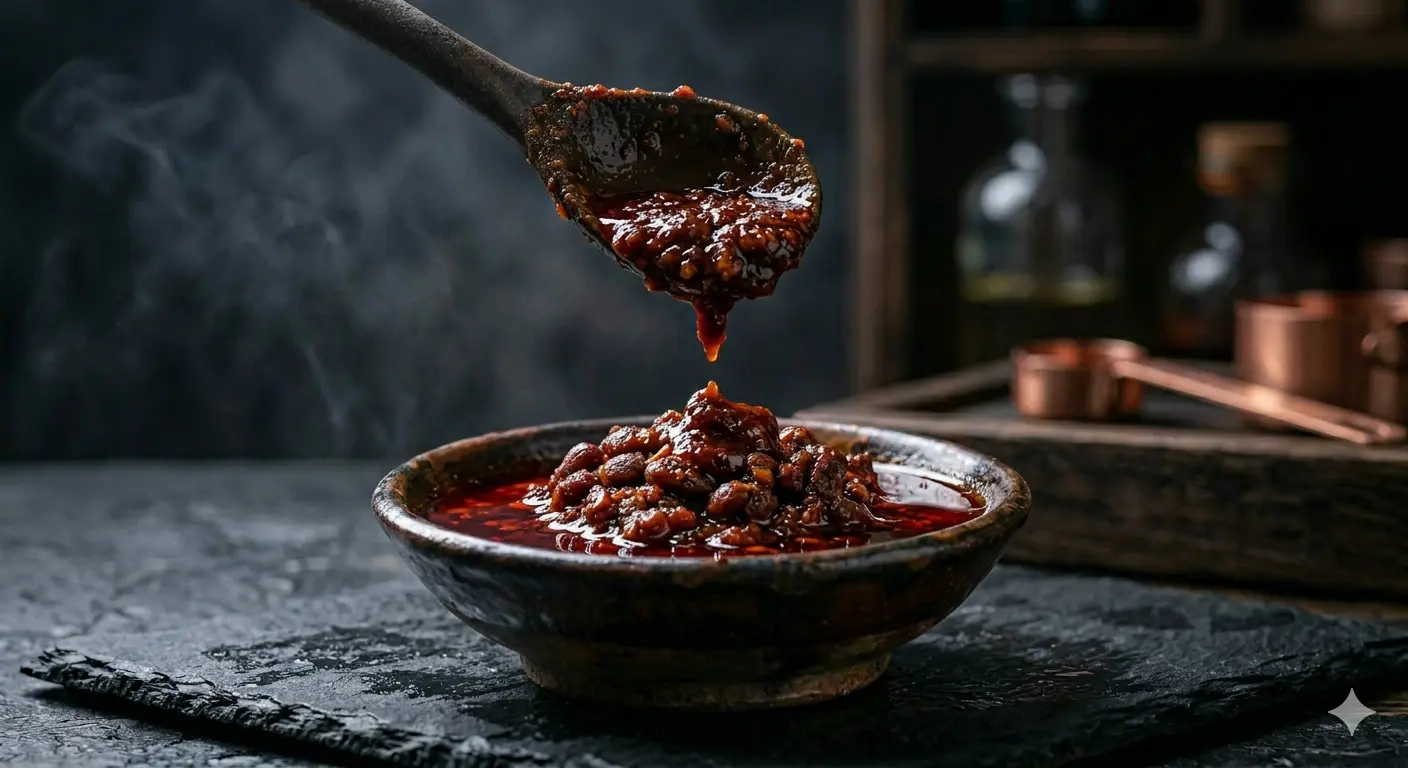
dark red-brown paste with visible chili flakes and bean pieces
Shopping Clue
Chunky paste — not smooth; has visible bean bits
Salt Level
Definition
What It Is
The Pixian Pilgrimage
In 2023, I took a bus three hours from Chengdu to Pixian (郫县), a small district that gives the world its most famous fermented bean paste. The entire town smells like doubanjiang — earthy, funky, spicy, fermented. Giant clay urns line the streets, each holding hundreds of kilos of broad beans, chilis, salt, and wheat flour, slowly transforming under the Sichuan sun for anywhere from 6 months to 3 years.
I tasted doubanjiang straight from a 3-year-old urn. It was nothing like the jarred version I'd been buying at Asian groceries. This was alive — still slightly bubbling with residual fermentation, with a complexity that changed second by second on my tongue: salt first, then fermented bean funk, then a slow-building heat, then an earthy finish that lasted for minutes.
What Makes Doubanjiang Different
Doubanjiang is not "chili paste." It's fermented broad beans (fava beans) and chilis, aged together. The fermentation process — driven by naturally occurring molds, yeasts, and bacteria — breaks down proteins into amino acids (umami) and starches into sugars (sweetness). Learn what umami actually is and how fermentation creates the savory depth that defines Sichuan cooking. The result is a paste that's simultaneously salty, funky, spicy, and subtly sweet, with a texture that's chunky from visible bean pieces and chili flakes.
Most doubanjiang sold outside China is aged 3-6 months. The good stuff — Pixian Doubanjiang with a 3-year age statement — costs 3x more and tastes 10x better. If you can find the aged version, buy it. It's the difference between a good mapo tofu and one that makes people close their eyes when they chew.
Why You Must Fry It First
Never add doubanjiang raw to a dish. It must be fried in oil first — a technique called "blooming" (煸香). As the paste hits hot oil, the fermented flavors open up and mellow, the chili oils release into the fat, and the raw fermented sharpness transforms into deep, round, savory complexity. Thirty seconds of frying is the difference between "this tastes funky" and "this tastes incredible."
Substitution Reality Check
Need a doubanjiang substitute right now? The closest swap is gochujang + 1 tsp salt + a pinch of Sichuan pepper — roughly 47% authentic. Nothing in a standard pantry replicates the fermented broad-bean funk; if a recipe leans on doubanjiang as the main flavor, the honest answer is to buy a tub ($5, keeps for months in the fridge).
Can you substitute gochujang (Korean chili paste) for doubanjiang? Technically yes, but you'll only get about 47% authenticity. Gochujang is sweeter (60 vs 15 on our sweet scale), less salty (50 vs 85), and lacks the fermented bean funk that defines Sichuan food. If you must substitute: add 1 tsp salt, reduce sugar elsewhere in the recipe, and add a pinch of Sichuan pepper for the numbing dimension. But honestly? Just buy doubanjiang. It lasts forever in the fridge and a tub costs $5.
理论基础 / The Science Behind It
The months-to-years aging of broad beans in clay urns — developing glutamates, esters, and complex umami — is fermentation at its most transformative.
Doubanjiang defines the flavor identity of an entire regional cuisine, showing how a single ingredient can shape a food culture.
No doubanjiang on hand? → Explore our doubanjiang substitutes guide
⚠️ Common Mistakes
- • Problems with Doubanjiang — The Soul of Sichuan Cooking? Diagnose the issue ->
Application
Best Uses
Best Used For
- + mapo tofu
- + twice-cooked pork
- + Sichuan braises
- + hot pot base
Avoid Using It For
- x using raw/cold (needs frying to bloom flavor)
- x replacing with plain chili paste
Pairings
Pairs Well With
Dishes
Dishes That Use This
- Mapo Tofu
- Twice Cooked Pork
Shelf Reading
How to Spot It
Use these shelf cues to identify the right bottle, jar, or bag before you ruin dinner with the wrong one.
Liquid Color
dark red-brown paste with visible chili flakes and bean pieces
Bottle / Form
wide jar or pouch
Label Clue
Look for 'Pixian' (郫县) on label — the authentic origin
Shopping Clue
Chunky paste — not smooth; has visible bean bits
Cap Color
varies (often gold or red label)
Labels
Chinese Label Cues
Substitutes
Emergency Replacements
Status
No dedicated substitute article is loaded for this ingredient yet.
If It Failed
If the Swap Went Wrong
Buying Guide
Best Brands to Look For
Pixian Douban
Pixian Fermented Broad Bean Paste | China/global
Lee Kum Kee
Chili Bean Sauce (Toban Djan) | global
Memory Hook
Label Memory Trick
What to remember
Look for 'Pixian' (郫县) on label — the authentic origin
Related
Related Ingredients
Tools
Useful Tools
Worth Reading
Go Deeper On This Flavor
Next Step
Continue the Flavor Trail
Continue from this ingredient into the broader flavor cluster, a substitution decision, or a failure diagnosis.
Written by Mike Sang
Digital strategist, fermentation science enthusiast, and student of the Tao. Bridging growth engineering with ancient Chinese food wisdom.
Seasonal Context
Flavor changes with the season. Your cooking should too.
Missing Umami is part of The Way of Nature, a living system connecting food, timing, and seasonal practice.