spice
Sichuan Pepper — Why Your Sichuan Food Isn't Numbing (And How to Fix It)
You bought the Sichuan pepper. You used it generously. But your dish is spicy, not numbing. Here's why — and the freshness test that changes everything.
Flavor Snapshot
0–100Six sensory dimensions, scored against the flavor reference for this ingredient.
Season Autumn
Related Ingredients 1
Flavor Notes
Quick Facts
Chinese Name
花椒
Category
spice
Texture / Body
Dry / N/A
Liquid Color
n/a
Shopping Clue
Should be brightly aromatic; dull = stale. Put one husk on tongue → tingling/numbing in 5 seconds
Salt Level
Definition
What It Is
The Numbing Chemical
Sichuan pepper doesn't produce heat — it produces má (麻), a tingling, buzzing, almost electric numbness that feels like your lips are vibrating at 50 Hz. The chemical responsible is hydroxy-alpha-sanshool, a molecule that activates the same touch receptors that detect light vibration. It's not a taste — it's a physical sensation. Your brain literally thinks your mouth is vibrating.
This is why Sichuan food is different from all other spicy cuisines. Thai food burns. Indian food warms. Sichuan food numbs. The science of umami explains how the interplay between numbing Sichuan pepper and savory glutamates creates the layered flavor experience that defines this cuisine. And if your Sichuan dish isn't numbing, your pepper is dead.
The Freshness Problem
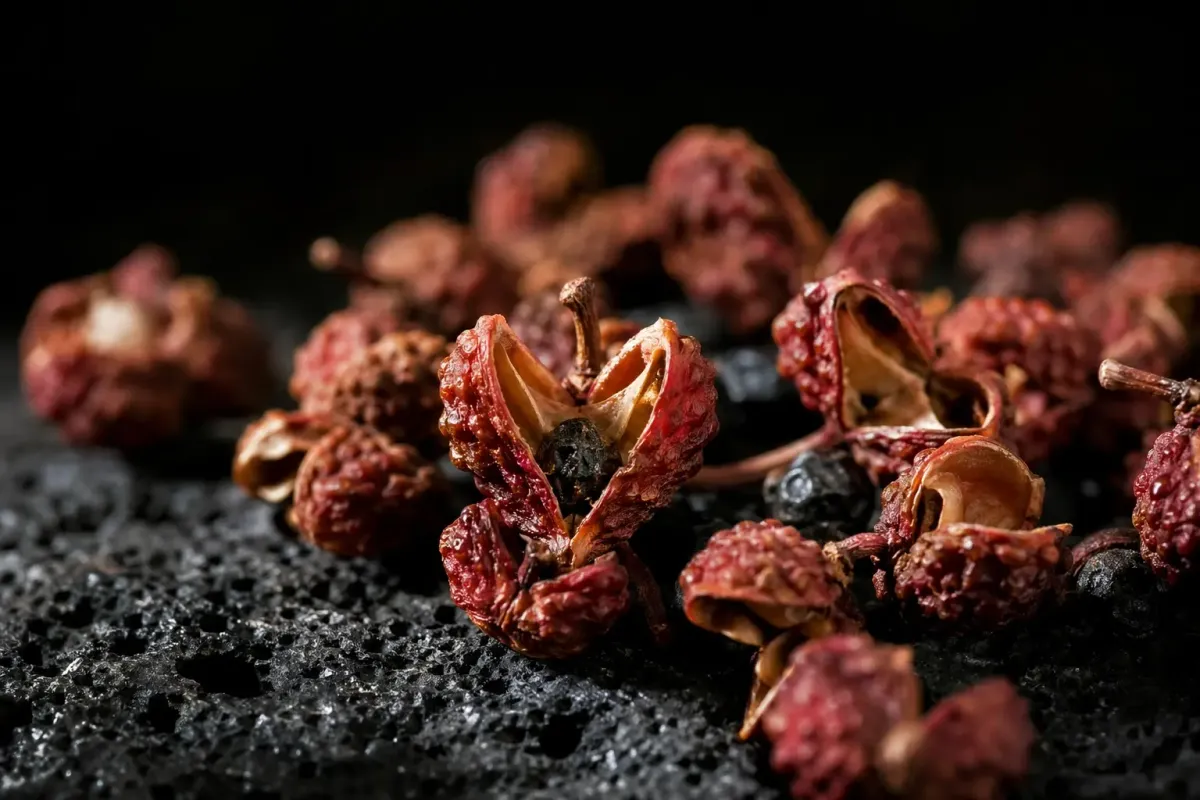
Hydroxy-alpha-sanshool is volatile. It evaporates. A bag of Sichuan pepper that's been sitting on a shelf for 18 months has lost 60-80% of its numbing power. The visual difference: fresh Sichuan peppercorns are bright reddish-brown and intensely aromatic. Stale ones are dull brown-gray and smell like old cardboard.
The 5-Second Freshness Test
Take one peppercorn husk (not the black seed — discard those). Place it on your tongue. If within 5 seconds you feel tingling, buzzing, or a mild electric sensation spreading across your tongue and lips: your pepper is alive. If you taste nothing after 10 seconds: your pepper is dead. Throw it away and buy a new bag.
Where to Buy Good Sichuan Pepper
The best Sichuan pepper comes from Hanyuan county in Sichuan. Look for vacuum-sealed packaging (exposure to air accelerates loss). Brands like Soeos on Amazon are decent for Western availability. Chinese grocery stores in areas with high Chinese populations sometimes carry the good stuff. Buy small quantities and use within 6 months.
理论基础 / The Science Behind It
Hydroxy-alpha-sanshool — the molecule behind má (麻) — doesn't burn like chili. It vibrates your touch receptors at 50 Hz, redefining what 'flavor' means.
⚠️ Common Mistakes
- • Problems with Sichuan Pepper — Why Your Sichuan Food Isn't Numbing (And How to Fix It)? Diagnose the issue ->
Application
Best Uses
Best Used For
- + mapo tofu
- + kung pao chicken
- + Sichuan hot pot
- + dry-fried dishes
Avoid Using It For
- x using stale pepper (no numbing = no Sichuan flavor)
- x grinding seeds with husks (seeds are gritty)
Pairings
Pairs Well With
Dishes
Dishes That Use This
- Mapo Tofu
- Kung Pao Chicken
- Twice Cooked Pork
Shelf Reading
How to Spot It
Use these shelf cues to identify the right bottle, jar, or bag before you ruin dinner with the wrong one.
Liquid Color
n/a
Bottle / Form
small spice jar or vacuum-sealed bag
Label Clue
Reddish-brown husks with tiny black seeds inside; seeds removed for cooking
Shopping Clue
Should be brightly aromatic; dull = stale. Put one husk on tongue → tingling/numbing in 5 seconds
Cap Color
n/a (sold in bags or jars)
Labels
Chinese Label Cues
Substitutes
Emergency Replacements
Status
No dedicated substitute article is loaded for this ingredient yet.
If It Failed
If the Swap Went Wrong
Buying Guide
Best Brands to Look For
Varies
Whole Sichuan Peppercorns | Sichuan/global
Soeos
Sichuan Peppercorns | US/Amazon
Memory Hook
Label Memory Trick
What to remember
Reddish-brown husks with tiny black seeds inside; seeds removed for cooking
Related
Related Ingredients
Tools
Useful Tools
Worth Reading
Go Deeper On This Flavor
Next Step
Continue the Flavor Trail
Continue from this ingredient into the broader flavor cluster, a substitution decision, or a failure diagnosis.
Written by Mike Sang
Digital strategist, fermentation science enthusiast, and student of the Tao. Bridging growth engineering with ancient Chinese food wisdom.
Seasonal Context
Flavor changes with the season. Your cooking should too.
Missing Umami is part of The Way of Nature, a living system connecting food, timing, and seasonal practice.