soy sauce
Dark Soy Sauce — Why Your Braised Pork Looks Pale Without It
Dark soy sauce isn't for seasoning. It's for color, body, and that glossy mahogany finish that makes Chinese braised dishes look like they came from a restaurant.
Flavor Snapshot
0–100Six sensory dimensions, scored against the flavor reference for this ingredient.
Season Winter
Related Ingredients 2
Flavor Notes
Quick Facts
Chinese Name
老抽
Category
soy sauce
Texture / Body
Medium
Liquid Color
deep opaque black, syrupy when poured
Shopping Clue
Pours slowly — noticeably thicker than light soy
Salt Level
Definition
What It Is
The Red Braised Pork That Wasn't Red
February 2018. Beijing. Lunar New Year's Eve. I was tasked with making 红烧肉 (red braised pork belly) — a dish I'd eaten a hundred times but never cooked. My recipe was perfect: pork belly, Shaoxing wine, rock sugar, star anise, ginger. I followed every step to the letter. After two hours of slow braising, I lifted the lid.
The pork was gray.
Not rich mahogany. Not glossy reddish-brown. Gray. Like hospital food gray. The taste was fine — actually, it was good. But it looked wrong, and in Chinese cooking, appearance is half the flavor. 色香味 (sè xiāng wèi) — color, aroma, taste. Color comes first for a reason.
My friend's mother glanced at my pot and said one word: "老抽呢?" (Where's the dark soy?) I had used light soy sauce — the right choice for 90% of Chinese cooking. But braising demands dark soy. I learned that night: light soy seasons. Dark soy paints.
What Makes Dark Soy Different
Dark soy sauce (老抽, lǎo chōu) is light soy sauce that's been aged longer and mixed with caramel or molasses. The character 老 (lǎo) means "old" — it's the aged version. The extended aging deepens the color and adds sweetness, while the added caramel gives it that signature syrupy body and glossy finish.
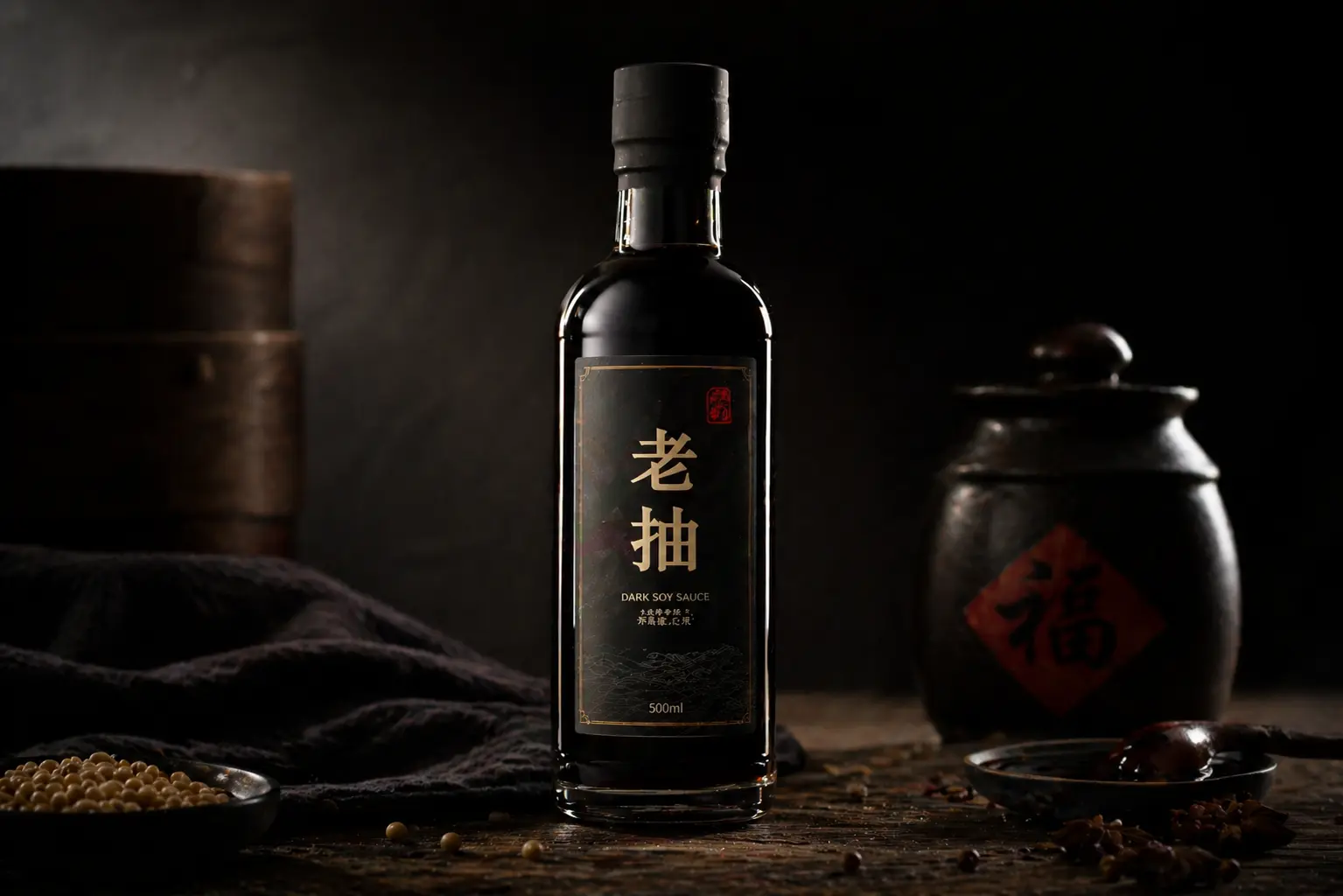
If you hold a bottle of dark soy up to the light and compare it to light soy, the difference is stark. Light soy is translucent amber-brown. Dark soy is opaque — nearly black, like strong coffee that's been sitting too long. When you pour it: light soy runs like water. Dark soy crawls down the bottle neck like thin honey.
The smell is different too. Light soy smells sharp, salty, fermented. Dark soy smells sweet and round — there's a caramel note that reminds me of the top of crème brûlée right after torching. My wife says dark soy "smells like Christmas" — that warm, spiced, brown-sugar aroma.
The Science of the Color
Dark soy sauce typically scores 90/100 on our color intensity scale — nearly 4 times higher than light soy's 25. That color comes from two sources:
- Extended fermentation — longer aging produces more melanoidins, the same brown pigments that give toasted bread and roasted coffee their color
- Added caramel color — most commercial dark soy contains E150c (ammonia caramel), the same coloring used in cola drinks
The viscosity (6/100 vs light soy's 2/100) means dark soy clings. It coats each piece of pork, each chunk of potato, each slice of tofu with a glossy film that catches the light. That's the "restaurant look" — and it's almost entirely dark soy's doing.
My Flavor Assessment
- Saltiness: 60 — Notably less salty than light soy. This is why you can't just swap them
- Umami: 65 — Less umami punch; the aging mellows the glutamates (Umami explained)
- Sweetness: 42 — Significantly sweeter from added caramel/molasses
- Color: 90 — The whole point of this sauce
- Viscosity: 6 — Syrupy enough to coat and glaze
When to Use Dark Soy (and When Not To)
Dark soy shines in:
- Red braising (红烧): Red braised pork, red braised beef, red braised tofu. These dishes are named after the color dark soy creates
- Fried rice color: Just 1-2 teaspoons gives fried rice that golden-brown takeout look
- Noodle coatings: Zhajiangmian and lo mein get their glossy appeal from dark soy
- Marinades for color: A tablespoon in a marinade pre-colors the meat before it hits the wok
Do NOT use dark soy as:
- Your only soy sauce in a stir-fry (too sweet, not salty enough)
- A dipping sauce base (overpowers everything)
- A 1:1 replacement for light soy (you'll get sweet, dark, and undersalted food)
The Combo Rule
Here's the most important thing I've learned: Chinese cooking almost never uses dark soy alone. The standard ratio for braising is 3 parts light soy : 1 part dark soy. Light soy brings the salt-umami foundation; dark soy brings the color and gloss. Together they create the complete "soy sauce effect" that Western recipes blur into one ingredient.
When I teach friends to cook Chinese food, I tell them: "Buy light soy first. Cook with it for a month. Then buy dark soy. The moment you add it to your first braised dish, you'll understand why you needed both."
Visual Recognition in the Store
In an Asian grocery, dark soy is usually right next to light soy — same brands, same bottle shapes, different labels. Look for:
- Labels saying "Dark Soy Sauce" or "Double Black Soy Sauce"
- Chinese characters 老抽
- Light test: hold bottle up to a light. Can't see through it? That's dark soy
- Pour test: thick, syrupy flow = dark soy. Fast, watery flow = light soy
Lee Kum Kee's dark soy has a gold cap (their light soy has green). Haitian's dark soy comes in a similar bottle but with a black label. Mushroom dark soy (a variant) is even thicker and richer — worth trying once you're comfortable with regular dark soy.
理论基础 / The Science Behind It
Dark soy sauce's caramel chemistry and extended aging connect directly to the fermentation traditions that underpin Chinese cuisine.
→ 发酵势在必行 / The Fermentation Imperative
The interplay of ingredients — light soy for salt, dark soy for color — is a microcosm of the broader food system where every component has a purpose.
Part of our Sauce Decoded series. Previous: Light Soy Sauce. Next: Oyster Sauce — The Umami Bomb.
⚠️ Common Mistakes
- • Problems with Dark Soy Sauce — Why Your Braised Pork Looks Pale Without It? Diagnose the issue ->
Application
Best Uses
Best Used For
- + red-braising
- + color coating
- + fried rice color
- + stewing
Avoid Using It For
- x as sole seasoning
- x light stir-fry
- x dipping
Pairings
Pairs Well With
Dishes
Dishes That Use This
- Red Braised Pork
Shelf Reading
How to Spot It
Use these shelf cues to identify the right bottle, jar, or bag before you ruin dinner with the wrong one.
Liquid Color
deep opaque black, syrupy when poured
Bottle / Form
tall bottle, similar to light soy
Label Clue
Label says 'Dark Soy Sauce'; liquid is nearly black
Shopping Clue
Pours slowly — noticeably thicker than light soy
Cap Color
varies (often gold or black)
Labels
Chinese Label Cues
Substitutes
Emergency Replacements
Status
No dedicated substitute article is loaded for this ingredient yet.
If It Failed
If the Swap Went Wrong
Buying Guide
Best Brands to Look For
Lee Kum Kee
Premium Dark Soy Sauce | global
Haitian
Dark Soy Sauce | China/Asia
Pearl River Bridge
Mushroom Dark Soy Sauce | global
Memory Hook
Label Memory Trick
What to remember
Label says 'Dark Soy Sauce'; liquid is nearly black
Related
Related Ingredients
Tools
Useful Tools
Worth Reading
Go Deeper On This Flavor
Next Step
Continue the Flavor Trail
Continue from this ingredient into the broader flavor cluster, a substitution decision, or a failure diagnosis.
Written by Mike Sang
Digital strategist, fermentation science enthusiast, and student of the Tao. Bridging growth engineering with ancient Chinese food wisdom.
Seasonal Context
Flavor changes with the season. Your cooking should too.
Missing Umami is part of The Way of Nature, a living system connecting food, timing, and seasonal practice.