Fix Dishes
My stir fry tastes flat and boring
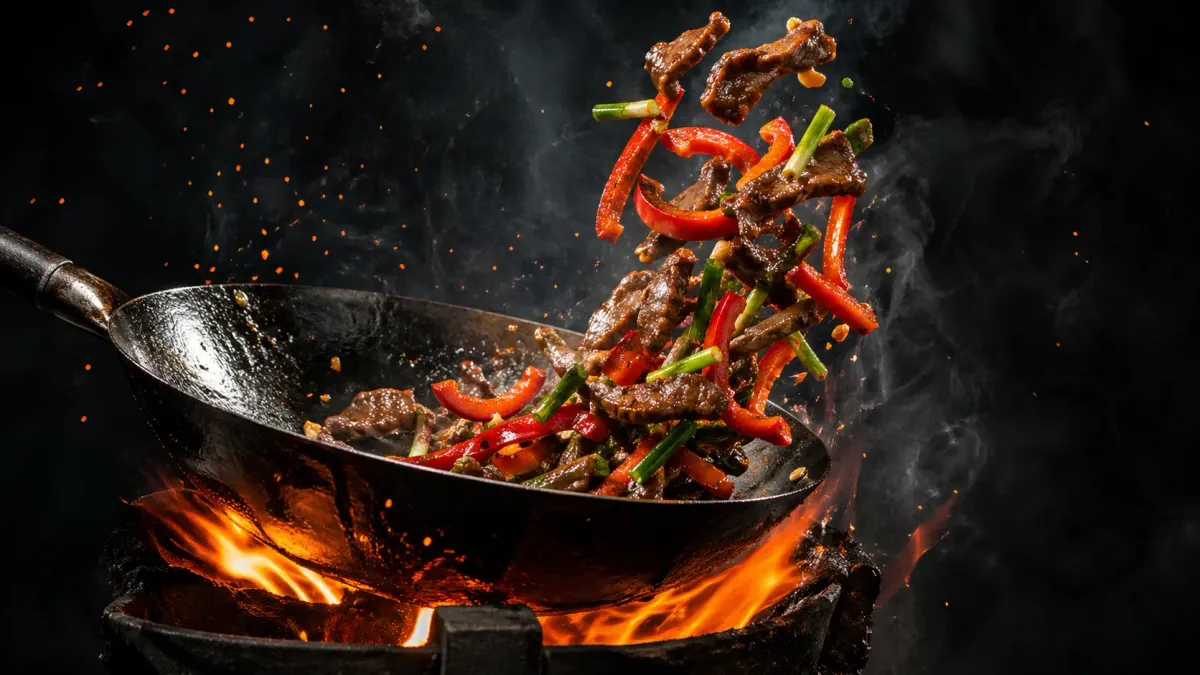
You've got the wok, the ingredients, the recipe. But your stir fry still tastes like something's missing. Here's why — and exactly how to fix it.
Season Summer
Related Ingredients 4
Related Dishes 3
Priority 1
45%
Using dark soy as all-purpose (missing sharp umami)
Priority 2
30%
No umami layering — only used one sauce
Priority 3
25%
Wok not hot enough — no wok hei
Diagnosis
Diagnosis Summary
Probability-weighted causes - most likely first.
Diagnosis #1
Using dark soy as all-purpose (missing sharp umami)
Fix
Swap to light soy sauce as your default. Keep dark soy for braising only.
Diagnosis #2
No umami layering — only used one sauce
Fix
Add oyster sauce or a pinch of MSG alongside your soy sauce for umami stacking.
Diagnosis #3
Wok not hot enough — no wok hei
Cause
Wok not hot enough — no wok hei
Fix
Use a carbon steel wok. Heat until smoking before adding oil. Cook in small batches.
The Tuesday Night That Taught Me Everything
Tuesday, 7:43 PM. I had all the ingredients: chicken breast, bell peppers, garlic, ginger, soy sauce. I had the wok — a beautiful carbon steel pan I'd seasoned myself over three afternoons. I had the technique: high heat, constant movement, add sauce at the end.
The result? It tasted like... warm vegetables with salt. Not bad. Just nothing. No depth. No punch. No "I need another bite" magnetism. Just emptiness on a plate.
I sat there, chopsticks hovering, genuinely confused. I'd done everything right. Hadn't I?
Diagnosis #1: You Used Dark Soy Sauce as Your Only Soy Sauce (Probability: 45%)
This is the #1 mistake I see — and the one I made that Tuesday night. Dark soy sauce has a color score of 90 but an umami score of only 65. It's designed for color, not seasoning. If you use it as your all-purpose soy sauce, your food will look beautiful and taste bland.
The Fix: Swap to light soy sauce (生抽) as your default. Light soy scores 82 on umami — that's 26% more savory depth. Keep dark soy for braising and color, not everyday seasoning. One bottle of each. They serve different gods.
Diagnosis #2: You Only Used One Umami Source — No Layering (Probability: 30%)
Chinese cooking is umami stacking. Learn about umami — it's the essential foundation for understanding why stacking multiple savory sources creates a flavor that's greater than the sum of its parts. Soy sauce is your bass note. But you need the rest of the orchestra:
- A splash of oyster sauce adds inosinate, which amplifies glutamate by up to 8x
- Dried shiitake mushrooms (soaked, with the soaking water added to the wok) bring guanylate — another amplifier
- A pinch of MSG — yes, MSG — can add the final 10% that takes a dish from "good" to "restaurant"
The Fix: Add one more umami source to your next stir-fry. If you're using soy sauce, add oyster sauce. If you're using oyster sauce, add a soaked dried shiitake. The combo is what matters, not the quantity.
Diagnosis #3: Your Wok Wasn't Hot Enough — No Wok Hei (Probability: 25%)
Wok hei (镬气) is the smoky, charred, "breath of the wok" flavor that defines restaurant-quality stir-fries. It's created when oil vaporizes at extreme heat (350°C+) and the food's surface undergoes instant Maillard reaction.
If you hear sizzling, you're at about 180°C — boiling, not searing. If you hear a roar and see oil shimmering and starting to smoke, you're in wok hei territory. Most home stoves can't reach this temperature, especially electric or induction cooktops.
The Fix: Use a carbon steel wok (not nonstick — nonstick coating degrades above 200°C). Heat the empty wok until it's lightly smoking, THEN add oil. Cook in small batches — overcrowding drops the temperature instantly and steams your food instead of searing it. One chicken breast at a time, not three.
The Sound Test
Here's something I learned from a street food vendor in Guangzhou: listen to your wok. The moment your ingredients hit the oil, you should hear a sharp, aggressive sizzle — almost a crackle. If it sounds like a gentle simmer, your wok isn't hot enough. If it's silent? You're boiling, and you need to start over.
My Quick Fix Protocol
If your stir fry tastes flat right now:
- Add 1 teaspoon of light soy sauce directly to the finished dish (not dark soy)
- Add a tiny pinch of MSG or a drop of fish sauce for instant umami
- If the dish tastes salty but still flat, you have the wrong soy sauce — you can't fix this with more salt. Start over with the right bottle.
- Serve immediately — stir-fried food loses its magic after 5 minutes
The Bottle Test
Go to your kitchen right now. Pick up the soy sauce you used. Does the label say "Light Soy Sauce" or 生抽? If it says "Dark Soy Sauce," "Double Black," or 老抽 — that's your problem. Buy a bottle of light soy before your next stir-fry. It's a $4 fix for a problem that's been frustrating you for years.
If you have both bottles and still struggle, try our Soy Sauce Decoder. Tell us what you're cooking and what's in your hand — we'll tell you exactly what's going wrong.
理论基础 / The Science Behind It
A flat stir-fry is almost always an umami deficit or a technique problem. Dark soy's 65 umami score vs light soy's 82 explains the most common seasoning error.
The umami stacking strategy and the thermodynamics of wok hei are both rooted in food system science.
Fix your next failed dish: Why Your Sichuan Food Isn't Numbing
On this page
- The Tuesday Night That Taught Me Everything
- Diagnosis #1: You Used Dark Soy Sauce as Your Only Soy Sauce (Probability: 45%)
- Diagnosis #2: You Only Used One Umami Source — No Layering (Probability: 30%)
- Diagnosis #3: Your Wok Wasn't Hot Enough — No Wok Hei (Probability: 25%)
- The Sound Test
- My Quick Fix Protocol
- The Bottle Test
- 理论基础 / The Science Behind It
Continue Exploring
Written by Mike Sang
Digital strategist, fermentation science enthusiast, and student of the Tao. Bridging growth engineering with ancient Chinese food wisdom.
Seasonal Context
Flavor changes with the season. Your cooking should too.
Missing Umami is part of The Way of Nature, a living system connecting food, timing, and seasonal practice.