vinegar
Chinese Black Vinegar (Chinkiang Vinegar) — Uses, Substitutes & Flavor Guide
Chinkiang black vinegar isn't white vinegar with food coloring. It's malty, umami-laced, and fermented from glutinous rice. Learn how to use it in 5 essential recipes and what to substitute when you're out.
Flavor Snapshot
0–100Six sensory dimensions, scored against the flavor reference for this ingredient.
Season Autumn
Related Ingredients 1
Flavor Notes
Quick Facts
Chinese Name
镇江香醋
Category
vinegar
Texture / Body
Medium
Liquid Color
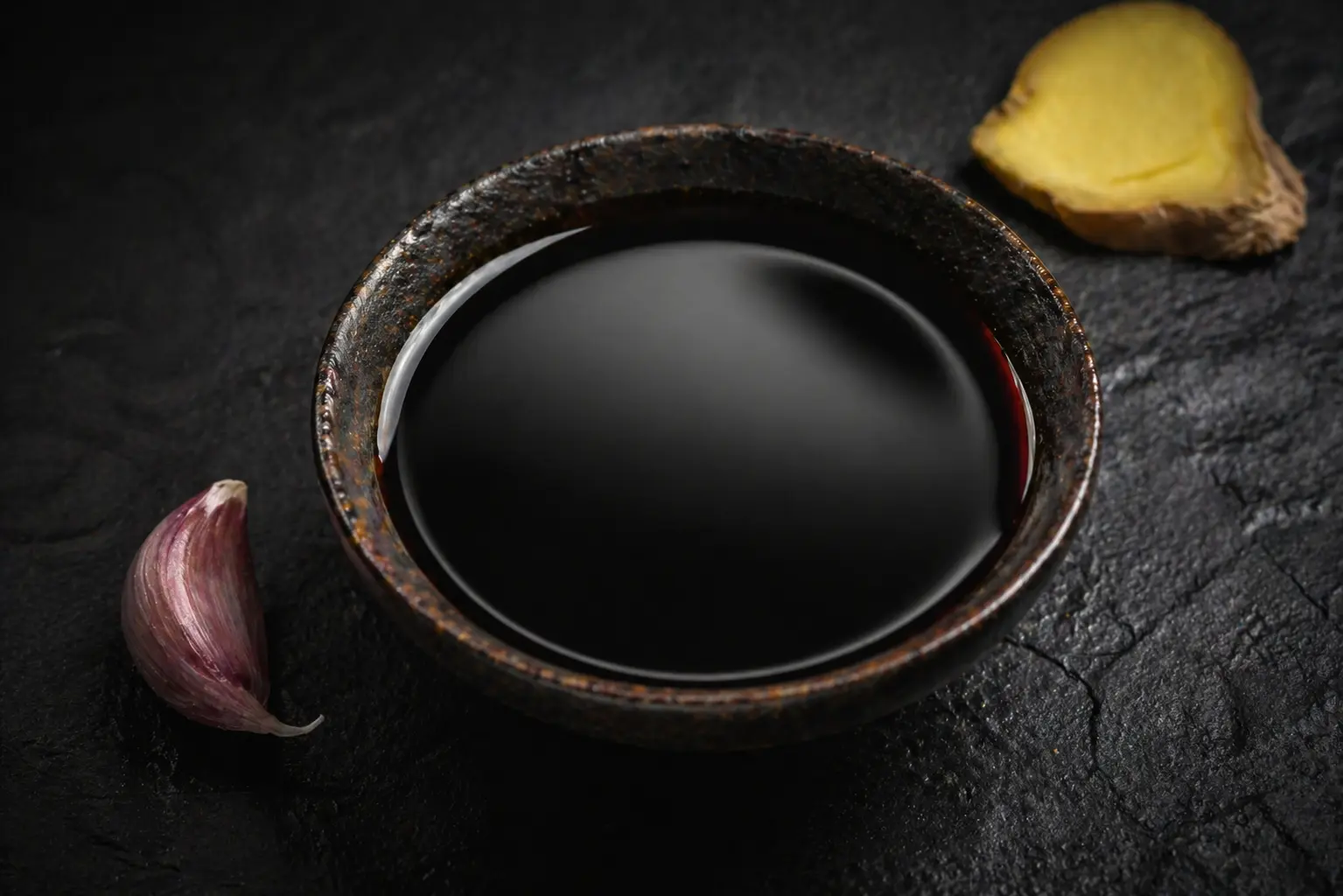
deep black, opaque
Shopping Clue
Smells malty and complex — nothing like white vinegar
Salt Level
Definition
What It Is
White vinegar has no place in Chinese cooking. I used it for three years — in stir-fries, in dipping sauces, in marinades — before I discovered Chinkiang black vinegar at a Shanghai street stall. The difference was so profound that I threw out my bottle of white vinegar that same week and have never bought another one.
Balsamic vinegar is not a substitute for Chinese black vinegar. I've seen this suggestion in at least a dozen English-language recipes, and it's wrong in a way that matters. Balsamic is sweet-forward, with grapey, jammy notes from the grape must reduction. Chinese black vinegar is malty-forward, with smoky, umami-laced acidity from the glutinous rice fermentation. They are both dark, aged vinegars. That's where the similarity ends. Using balsamic in a Chinese dipping sauce will make it taste Italian. Using black vinegar will make it taste like a restaurant in Shanghai.
The best Chinese black vinegar costs about $15 HKD and comes in a square glass bottle with a yellow label. Gold Plum (金梅) brand, Chinkiang vinegar. It's the one with the characters 镇江香醋 prominently displayed. I've tried more expensive brands — there's a 10-year-aged version that costs $80 HKD — and they're better, with more complexity and a smoother finish. But the $15 version is 90% as good for 20% of the price. Unless you're making dipping sauces for a dinner party where every guest cares about vinegar nuance, the Gold Plum is all you need.
The first time I tasted Chinese black vinegar, I was in Shanghai in 2023, sitting at a street stall near the Yu Garden, eating xiaolongbao — the soup dumplings with the impossibly thin skins. The stall provided a small dish of dark liquid for dipping. I assumed it was soy sauce. I dipped a dumpling, bit into it, and the flavor was wrong — not in a bad way, but wrong relative to my expectations. Instead of salty-umami, I tasted malty-sweet-sour with a smoky undertone and a specific kind of acidity that made my mouth water instantly. It was the most interesting vinegar I had ever tasted.
I asked the vendor in my broken Mandarin: "这是什么?" What is this?
He pointed at a bottle on the counter. 镇江香醋. Zhenjiang fragrant vinegar.
I had been using plain white rice vinegar in my Chinese cooking for three years, assuming that "vinegar" was a commodity ingredient — interchangeable, irrelevant, not worth thinking about. That single xiaolongbao taught me that vinegar is as varied and significant as wine, and that the right vinegar changes a dish as much as the right soy sauce. I bought a bottle of Gold Plum at the first supermarket I found and carried it back to Hong Kong in my carry-on luggage.
Key Takeaways
- Chinese black vinegar (Chinkiang vinegar / 镇江香醋) is malty-forward with umami — fundamentally different from balsamic (sweet-forward) and white vinegar (pure acidity)
- Made from glutinous rice fermented with Monascus purpureus (red yeast mold) in clay urns for 6 months to 10 years — the mold and clay-urn aging create the dark color and smoky-umami flavor
- It's the only widely available vinegar with significant umami (45/100) — that unique dimension makes it essential for Chinese cooking
- Gold Plum (金梅) brand at ~$15 HKD is 90% as good as aged versions at $80 HKD — the standard recommendation for daily use
- Five key applications: dumpling dipping sauce, Kung Pao sauce, hot and sour soup, cold noodle dressing, and the "something's missing" acid fix
What Makes Black Vinegar Different — The Chemistry
Chinese black vinegar begins as glutinous rice that's fermented with a specific mold culture — Monascus purpureus — the same mold that gives red yeast rice its color. The fermentation happens in clay urns, exposed to the air, for 6 months to 10 years depending on the grade. The mold produces the dark color and contributes the malty, slightly smoky flavor that defines the vinegar. The clay urns allow slow oxidation, which rounds out the acidity and develops the umami notes that you never get from industrially produced white vinegar.
The flavor profile is unique among vinegars: acidity (70/100), umami (45/100), sweetness (25/100), and a faint smokiness from the clay urn aging. Compare that to white vinegar (acidity 95+, zero umami, zero sweetness) or balsamic (acidity 50, sweetness 35, zero umami) and the difference is clear. What is umami flavor? Chinese black vinegar is the only widely available vinegar with significant umami. That's what makes it essential for Chinese cooking — it adds a dimension that no other vinegar can replicate.
Vinegar Comparison: Chinese Black vs Balsamic vs White
| Characteristic | Chinese Black Vinegar (镇江香醋) | Balsamic Vinegar | White Vinegar |
|---|---|---|---|
| Primary base | Glutinous rice | Grape must | Diluted acetic acid |
| Fermentation agent | Monascus purpureus (red yeast mold) | Natural grape fermentation | Industrial acetic acid bacteria |
| Umami level | 45/100 — significant | 0/100 — none | 0/100 — none |
| Sweetness | 25/100 — mild | 35/100 — prominent | 0/100 — none |
| Acidity | 70/100 — balanced | 50/100 — mild | 95/100 — aggressive |
| Smokiness | Faint (clay-urn aging) | None | None |
| Best use | Chinese dipping sauces, stir-fries | Salads, Caprese, reductions | Cleaning, pickling |
| Source | Wikipedia — Chinkiang vinegar | Wikipedia — Balsamic vinegar | Wikipedia — Vinegar |
How to Choose Black Vinegar
Choosing between black vinegars — Chinkiang vs Shanxi vs Yongchun — and the full tested substitute matrix is in the black vinegar vs Chinkiang selection guide.
Chinese black vinegar is available in a range of grades. The two most common are the everyday standard and the aged premium:
| Aspect | Standard (Gold Plum) | Aged Premium |
|---|---|---|
| Price | ~$15 HKD | ~$80 HKD |
| Aging | 6-12 months | 8-10+ years |
| Flavor | Malty, bright acidity | Complex, smooth, mellow |
| Best use | Daily cooking, dipping sauces | Finishing, special dishes |
| Value | 90% of aged quality at 20% of the price | Reference benchmark |
For everyday cooking — dumpling sauces, stir-fries, braises — the standard Gold Plum is all you need. Save the aged version for occasions where the vinegar is the star, like a simple dip or cold dressing.
Chinese Black Vinegar Substitutes
No bottle on hand? Three workable swaps, ranked by how close they land:
- Balsamic vinegar (1:1) — the closest match in color, body, and malty sweetness. It's sweeter and less sharp, so cut any added sugar in the recipe by half. Best for dipping sauces and braises.
- Rice vinegar + molasses (1 tbsp + ¼ tsp per tbsp) — restores the malty depth balsamic brings, with a brighter finish. Best for Kung Pao-style sauces where the vinegar must stay sharp.
- Worcestershire + rice vinegar (1:2) — adds the fermented funk; use only in cooked dishes, never as a dumpling dip.
For the full tested matrix — including Chinkiang vs Shanxi vs generic "black vinegar" bottles — see the black vinegar vs Chinkiang selection guide.
How I Use It — Five Applications
1. Dumpling dipping sauce. The most important application and the one that taught me black vinegar exists. Mix 2 tablespoons black vinegar, 1 tablespoon light soy sauce, and a few slivers of fresh ginger. This is the standard dipping sauce for xiaolongbao, jiaozi, and most other Chinese dumplings. The black vinegar cuts through the richness of the pork filling while adding a malty complexity that soy sauce alone cannot provide.
2. Kung Pao Chicken sauce. The classic Kung Pao sauce ratio is 2 parts light soy : 1 part black vinegar : 1 part Shaoxing wine : 1/2 part sugar. The black vinegar provides the tangy-sour dimension that balances the sweet and savory. Using any other vinegar changes the flavor profile — rice vinegar makes it too sharp, balsamic makes it too sweet, white vinegar makes it aggressive and one-dimensional.
3. Hot and sour soup. Black vinegar is the "sour" in hot and sour soup. A tablespoon added at the end of cooking — after the heat is off, because boiling destroys the volatile aromatic compounds — gives the soup its characteristic tang. White vinegar makes hot and sour soup taste like a chemistry experiment. Black vinegar makes it taste like a Chinese restaurant.
4. Cold noodle dressing. Mix black vinegar, soy sauce, sesame oil, and a pinch of sugar. Toss with cold noodles, shredded cucumber, and sliced scallions. This is a summer staple in my Hong Kong kitchen — it takes five minutes, requires no cooking beyond boiling the noodles, and tastes like something you'd pay $50 HKD for at a noodle shop.
5. The "something's missing" fix. When a dish tastes flat even though it's properly salted and has enough umami, the problem is often a lack of acidity. A teaspoon of black vinegar — added off the heat — provides the acid lift without making the dish taste vinegary. This works for stir-fries, braises, and soups. I learned this trick from a Cantonese chef who watched me taste my own food, make a face, and reach for more soy sauce. "No," he said. "Vinegar." He was right.
Common Mistakes
Using white vinegar in Chinese cooking. White vinegar is pure acetic acid and water. It has no flavor complexity, no umami, no malt character. It adds acidity and nothing else. Chinese cooking needs vinegar that adds acidity plus flavor. If you're using white vinegar, you're adding the acid dimension while leaving the flavor dimension empty.
Using balsamic as a substitute and expecting the same result. They're superficially similar — both dark, aged, slightly sweet. The flavor profiles are fundamentally different. Balsamic will make your Kung Pao taste sweeter and fruitier. Black vinegar will make it taste like Kung Pao. If you must substitute balsamic (you're in a country without Asian grocery stores, or you ran out during cooking), use 3 parts balsamic mixed with 1 part rice vinegar and add a pinch of salt. This brings the acidity up and the sweetness down, approximating — but not replicating — black vinegar's balance.
Not replacing the bottle regularly. Black vinegar oxidizes slowly, but it does oxidize. A bottle that's been open for a year will taste flatter and less complex than a fresh one. I replace my Gold Plum every 6 months. At $15 HKD, this is the cheapest quality upgrade in my pantry.
FAQ
Q: What's the difference between Chinkiang vinegar and Shanxi aged vinegar? Chinkiang vinegar (镇江香醋) is from Jiangsu province, made from glutinous rice, and has a malty-sweet profile. Shanxi aged vinegar (山西老陈醋) is from Shanxi province, made from sorghum and barley, and is sharper, smokier, and more aggressive. Chinkiang is for southern Chinese cooking — dipping sauces, stir-fries, delicate applications. Shanxi is for northern Chinese cooking — hearty braises, noodle dishes, and applications where the vinegar needs to stand up to strong flavors. I keep Chinkiang for daily use. I buy Shanxi when I'm making northern-style dishes.
Q: How long does black vinegar last? Indefinitely, in a food-safety sense — the acidity prevents spoilage. The flavor degrades slowly over about 12-18 months after opening. Replace your bottle every 6-12 months for optimal flavor. Store in a cool, dark place. Refrigeration is not necessary but doesn't hurt.
Q: Can I use black vinegar in non-Chinese cooking? Yes. I use it in salad dressings (mixed with olive oil and a pinch of sugar — the maltiness works surprisingly well with bitter greens), in marinades for grilled meats, and as a finishing acid for rich stews. The key: use less than you think you need. Black vinegar is more complex than Western vinegars, and a little goes further.
Storage & Shelf Life
Black vinegar lasts indefinitely from a food-safety perspective — the acidity prevents microbial growth — but the flavor degrades over time. An unopened bottle stored in a cool, dark cupboard stays fresh for years. Once opened, the vinegar slowly oxidizes as air replaces the volume in the bottle, and the flavor flattens noticeably after 12-18 months.
I keep my open bottle in the pantry, not the fridge. Refrigeration extends shelf life but the cold dulls the aromatic compounds, and black vinegar is viscous enough to pour slowly at fridge temperature. A cool, dark cupboard is ideal.
Storage Comparison
| Factor | Pantry (Cool, Dark) | Refrigerator |
|---|---|---|
| Flavor peak | 6-12 months after opening | 12-18 months after opening |
| Convenience | Ready to pour, full aroma | Slower pour, aroma needs warming |
| Risk | Faster oxidation after opening | Minimal oxidation, longer life |
| Recommendation | Best for regular use | Best for infrequent use |
Replace your bottle every 6 months if you cook with it regularly. At $15 HKD per bottle, this is the cheapest quality upgrade in your pantry.
References: Wikipedia — Chinkiang vinegar; Wikipedia — Monascus purpureus; Wikipedia — Balsamic vinegar; Wikipedia — Vinegar.
理论基础 / The Science Behind It
Chinkiang vinegar uses Monascus purpureus to ferment glutinous rice into a vinegar with measurable umami — something no Western vinegar achieves.
The unique malty-smoky profile of black vinegar, shaped by clay-urn aging, connects fermentation craft to the broader domain of food knowledge.
⚠️ Common Mistakes
- • Problems with Chinese Black Vinegar (Chinkiang Vinegar) — Uses, Substitutes & Flavor Guide? Diagnose the issue ->
Application
Best Uses
Best Used For
- + dipping dumplings
- + cold appetizers
- + braising
- + sweet-sour sauce
- + noodle dressing
Avoid Using It For
- x replacing with Italian balsamic (different acidity profile)
- x using white/cider vinegar
Pairings
Pairs Well With
Dishes
Dishes That Use This
- Kung Pao Chicken
- Hot And Sour Soup
- Dumplings
Shelf Reading
How to Spot It
Use these shelf cues to identify the right bottle, jar, or bag before you ruin dinner with the wrong one.
Liquid Color
deep black, opaque
Bottle / Form
tall glass bottle, often with yellow label
Label Clue
Gold/Yellow label Chinkiang (镇江) vinegar is the authentic one
Shopping Clue
Smells malty and complex — nothing like white vinegar
Cap Color
yellow or gold cap is iconic
Labels
Chinese Label Cues
Substitutes
Emergency Replacements
Status
No dedicated substitute article is loaded for this ingredient yet.
If It Failed
If the Swap Went Wrong
Buying Guide
Best Brands to Look For
Gold Plum
Chinkiang Vinegar | China/global
Haitian
Rice Vinegar | China/Asia
Memory Hook
Label Memory Trick
What to remember
Gold/Yellow label Chinkiang (镇江) vinegar is the authentic one
Related
Related Ingredients
Tools
Useful Tools
Worth Reading
Go Deeper On This Flavor
Next Step
Continue the Flavor Trail
Continue from this ingredient into the broader flavor cluster, a substitution decision, or a failure diagnosis.
Written by Mike Sang
Digital strategist, fermentation science enthusiast, and student of the Tao. Bridging growth engineering with ancient Chinese food wisdom.
Seasonal Context
Flavor changes with the season. Your cooking should too.
Missing Umami is part of The Way of Nature, a living system connecting food, timing, and seasonal practice.