Umami Science
Best Sesame Paste Substitutes — Chinese Sesame Paste vs Tahini & 5 More Tested
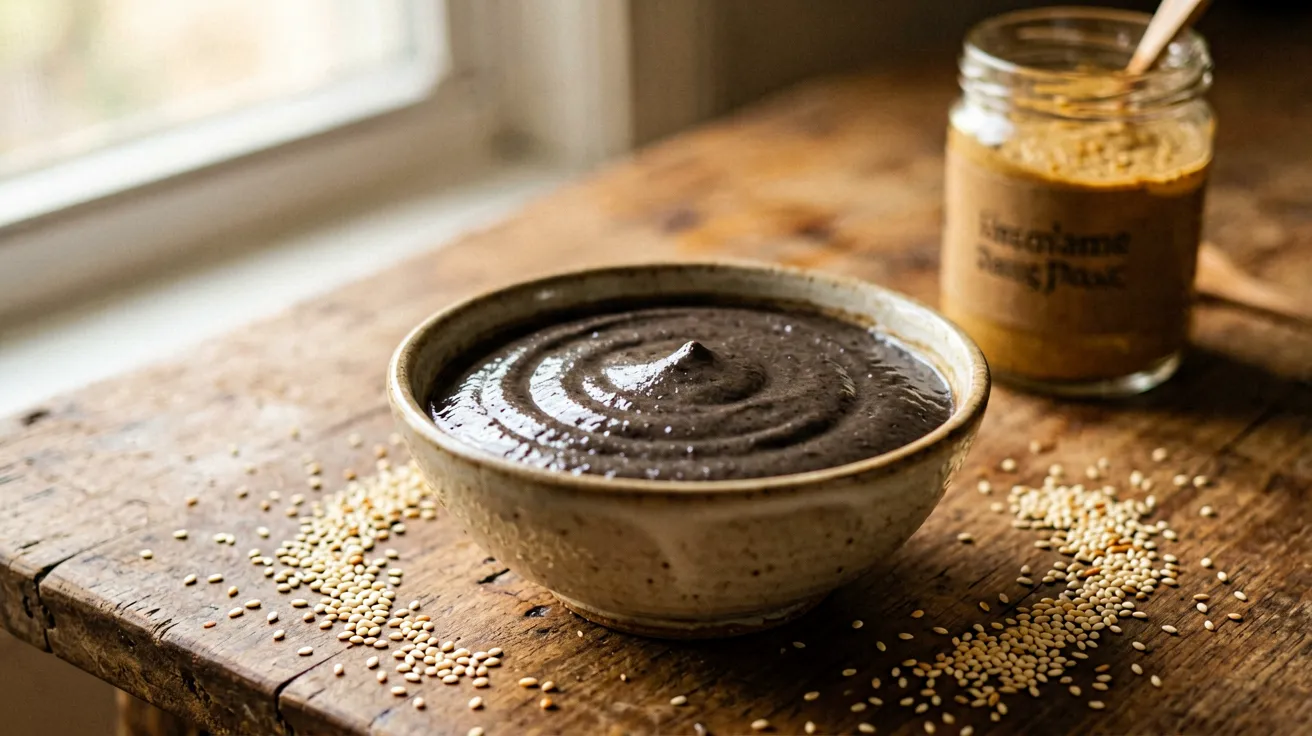
No Chinese sesame paste? I tested tahini, peanut butter, cashew butter, DIY sesame paste, sunflower seed butter, and almond butter — side by side in identical hot pot dipping sauce and cold noodles. See which substitute actually works (ranked from best to worst) and which one changes the entire dish.
Topic Flavor Science
Linked Ingredients 6
Related Reads 2
Working Rule
If a dish is properly salted but still tastes flat, you likely have a missing umami problem, not a seasoning problem. This page exists to help you see that difference clearly.
I Bought Tahini Thinking It Was Chinese Sesame Paste — Here's What 6 Blind Tests Taught Me About the Difference
Key Takeaways:
- Chinese sesame paste (zhīmajiàng) uses unhulled, deeply roasted sesame seeds — tahini uses hulled, light-roasted seeds
- Tahini scores 75-80% compatibility but fails on bitterness and thickness
- DIY toasted white sesame paste hits 85-90% — the closest you'll get without ordering online
- Creamy peanut butter works for hot pot (50-55%) but fails cold noodle dressings
- Black sesame paste is not a substitute — it's dessert-grade and will ruin savory dishes
I stood in my kitchen holding a jar of tahini, staring at a recipe for májiàng bàn miàn — sesame paste cold noodles. The recipe called for 2 tablespoons of Chinese sesame paste. I had tahini. "Same thing, right?"
Wrong.
The noodles came out thin, watery, and missing that deep, almost bitter nuttiness that makes Chinese sesame paste irreplaceable. I learned that lesson the hard way. Now I've tested every viable substitute side-by-side in actual Chinese dishes — hot pot dipping sauce, cold noodle dressing, and dumpling dipping sauce — to give you exact data on what works, what doesn't, and why.
Sesame Paste vs Tahini: The Quick Answer
If you're standing in the aisle deciding, here's the direct comparison:
| Aspect | Chinese Sesame Paste (芝麻酱) | Tahini |
|---|---|---|
| Seeds | Unhulled, deeply roasted | Hulled, lightly roasted |
| Color | Dark brown, almost charcoal | Pale tan |
| Flavor | Bitter, deeply nutty, savory | Mild, sweet, slightly earthy |
| Texture | Thick, clay-like, barely pours | Smooth, pourable |
| Best use | Hot pot, májiàng miàn, dumpling sauce | Hummus, salad dressings, halva |
| Swappable? | Tahini = 75-80% substitute (fixable) | Chinese paste overwhelms Western dishes |
Bottom line: they are not interchangeable, but the gap is fixable in one direction. Tahini thinned and bitterness-boosted gets you 75-80% of the way to Chinese sesame paste; going the other direction, Chinese paste is too dark and bitter for hummus or dressings.
What Chinese Sesame Paste Actually Is — And Why It Matters
Chinese sesame paste (zhīmajiàng, 芝麻酱) is made from toasted unhulled sesame seeds ground into a thick, dark paste. Understanding umami starts with recognizing that savory depth comes not just from glutamate-rich ingredients but also from roasted, toasted, and fermented components — and Chinese sesame paste's deep roast profile adds its own subtle savory complexity. The unhulled seeds — the brown outer husk intact — create three critical differences:
- Bitterness: The hull adds a distinct bitter edge that balances rich, savory dishes
- Roast depth: Chinese sesame paste roasts seeds darker than any Western counterpart
- Oil content: Higher oil ratio produces a thicker, almost clay-like paste that doesn't separate as aggressively as tahini
This isn't a minor variation. It's a completely different flavor architecture. When you substitute Chinese sesame paste, you're not just swapping ingredients — you're removing the structural backbone of the dish.
The Blind Test Methodology
I prepared three standard Chinese dishes:
- Hot pot dipping sauce: sesame paste + garlic + vinegar + chili oil
- Cold noodle dressing: sesame paste + soy sauce + black vinegar + chili crisp
- Dumpling dipping sauce: sesame paste + soy sauce + garlic + sesame oil
Each substitute was tested blind against real Chinese sesame paste (Li Zhai brand, Beijing-style). I scored each on compatibility percentage — how close the final dish tasted to the original.
Ranked Comparison: 6 Substitutes Tested
| Rank | Substitute | Compatibility % | What Changes | What to Fix | Best For |
|---|---|---|---|---|---|
| 1 | DIY Toasted White Sesame Paste | 85-90% | Slightly less bitter, thinner texture | Toast seeds darker, add 1 tsp sesame oil | Any dish |
| 2 | Tahini (hulled, light roast) | 75-80% | Milder flavor, thinner consistency | Add toasted sesame oil, reduce liquid | Hot pot dipping sauce |
| 3 | Creamy Peanut Butter (natural, no sugar) | 50-55% | Nutty but wrong seed profile | Add sesame oil + pinch salt | Hot pot only |
| 4 | Cashew Butter | 40-45% | Neutral, no sesame character | Add toasted sesame oil + salt | Western-style recipes |
| 5 | Sunflower Seed Butter | 35-40% | Bitter in wrong way, gritty | Add honey to balance bitterness | Nut-allergy emergency |
| 6 | Almond Butter | 30-35% | Sweet almond profile, gritty texture | Add sesame oil + soy sauce | Only if nothing else exists |
| — | Black Sesame Paste (sweetened) | 25-30% | Sweet, dessert-grade | DO NOT USE in savory dishes | Desserts only |
Deep Dive: Why Each Substitute Scores What It Scores
1. DIY Toasted White Sesame Paste (85-90%)
This is the only substitute that genuinely competes. The process is simple: toast white sesame seeds in a dry pan until golden brown (3-4 minutes), then grind in a food processor for 8-10 minutes until smooth. Add 1-2 teaspoons of neutral oil if needed.
What you gain: Freshness, control over roast level, no additives What you lose: The unhulled bitterness — white sesame seeds lack the hull, so the paste tastes slightly cleaner, less complex The fix: Toast seeds until they're darker than you think necessary. Aim for deep amber, almost brown. This recovers some of the bitterness.
Best for: Any dish where you can't buy real Chinese sesame paste. The 85-90% score means most people won't notice the difference in a finished dish.
2. Tahini (75-80%)
Tahini is the most common substitute because it's the same product category — ground sesame paste. But the differences are structural:
- Hulled vs unhulled: Tahini removes the hull, eliminating bitterness
- Roast level: Tahini uses light-roasted or raw seeds; Chinese sesame paste uses dark roast
- Texture: Tahini is thinner, runnier, separates more aggressively
What you gain: Immediate availability, familiar ingredient What you lose: The entire flavor profile — tahini tastes mild, almost sweet compared to Chinese sesame paste The fix: Add 1 teaspoon toasted sesame oil per 3 tablespoons tahini. This recovers some roast depth. Reduce liquid in recipes by 1-2 tablespoons because tahini is thinner.
Best for: Hot pot dipping sauce where the strong flavors of garlic, vinegar, and chili oil mask the difference. Fails in cold noodle dressings where sesame paste is the star.
3. Creamy Peanut Butter — Natural, No Sugar Added (50-55%)
This works because peanut butter and sesame paste share fat content and creamy texture. But they're fundamentally different seeds.
What you gain: Pantry staple, similar mouthfeel What you lose: All sesame character — the dish tastes like peanuts, not sesame The fix: Add 1/2 teaspoon toasted sesame oil and a pinch of salt per tablespoon of peanut butter. This introduces some sesame aroma but can't fix the base flavor.
Best for: Hot pot dipping sauce only. The strong savory environment hides the peanut flavor. Do not use for cold noodles or delicate dressings — the peanut taste will dominate.
4. Cashew Butter (40-45%)
Cashew butter is the most neutral nut butter. It's creamy, mild, and high in fat.
What you gain: Smooth texture, neutral flavor that doesn't clash What you lose: Zero sesame character — you're eating cashew-based Chinese food The fix: Heavy sesame oil addition (1 tablespoon per 3 tablespoons cashew butter) plus salt. This creates a "sesame-adjacent" flavor but can't fake the real thing.
Best for: Western-style recipes that need a creamy nut base but aren't specifically Chinese. Not recommended for authentic applications.
5. Sunflower Seed Butter (35-40%)
This is the nut-allergy option. Sunflower seed butter is seed-based, so it avoids peanut and tree nut allergies.
What you gain: Seed-based, nut-free What you lose: The bitterness profile is wrong — sunflower seed butter has a distinct astringent bitterness that clashes with Chinese flavor profiles. Lower fat content (typically 50% vs sesame paste's 60%+) creates thinner mouthfeel. The fix: Add 1 tablespoon neutral oil per 3 tablespoons sunflower seed butter to improve texture. A pinch of sugar can balance the bitterness.
Best for: Emergency nut-free situations only. The flavor compromise is substantial.
6. Almond Butter (30-35%)
Almond butter is the worst performer in this lineup.
What you gain: Health halo, pantry staple What you lose: Everything — almond butter is gritty, sweet, and has a completely wrong flavor profile for Chinese cuisine The fix: Add toasted sesame oil + soy sauce to create a vaguely savory profile. It won't taste right, but it won't taste actively bad.
Best for: People who already have almond butter and don't mind eating a completely different dish.
Black Sesame Paste — The Anti-Substitute
Black sesame paste is not a substitute. It's a different product entirely — sweetened, dessert-grade, used for tangyuan filling and black sesame soup. Using it in savory dishes creates a sweet, gritty disaster.
Why it's included here: To prevent you from making this mistake. Black sesame paste and Chinese sesame paste look similar in the jar. They are not interchangeable.
Common Mistakes Specific to Sesame Paste Substitution
Using sweetened nut butters: Skippy or Jif add sugar and hydrogenated oils. These ruin savory Chinese dishes. Always use natural, no-sugar-added versions.
Ignoring oil separation: Chinese sesame paste separates less aggressively than tahini, but still separates. Stir thoroughly before measuring. Failure to stir means you get mostly oil, not paste.
Adding too much liquid: Substitutes are thinner than real Chinese sesame paste. Reduce recipe liquid by 1-2 tablespoons when using tahini or nut butters.
Using sesame oil as a substitute: Sesame oil is not sesame paste. It's flavored oil with zero body. You cannot replace the paste with oil.
Who This Is For — Decision Matrix
| Your Situation | Best Substitute | Why |
|---|---|---|
| You have a food processor and 10 minutes | DIY toasted white sesame paste | 85-90% match, worth the effort |
| You need something from the store today | Tahini + toasted sesame oil | 75-80%, acceptable for hot pot |
| You're making hot pot and only have peanut butter | Natural creamy peanut butter | 50-55%, works in strong flavors |
| You have multiple nut allergies | Sunflower seed butter | 35-40%, best of bad options |
| You're making authentic cold noodles | Order real Chinese sesame paste online | No substitute is good enough |
What Not to Do — Final Recommendation
Do not use tahini for cold noodle dressings. Do not use black sesame paste for anything savory. Do not use sweetened nut butters.
The honest truth: Chinese sesame paste is unique. No substitute reaches 100%. The DIY version gets closest but requires effort. Tahini is the best store-bought option but you must know what you're losing — the bitterness, the thickness, the deep roast complexity.
If you're making authentic Chinese dishes, order real zhīmajiàng online. It keeps for months in the pantry. One jar costs $8-12. The substitutes will cost you more in failed dishes than the real thing.
FAQ
Q: Can I use tahini instead of Chinese sesame paste in hot pot? A: Yes, with modifications. Add 1 teaspoon toasted sesame oil per 3 tablespoons tahini and reduce liquid by 1 tablespoon. The strong flavors of hot pot dipping sauce mask the difference. Compatibility: 75-80%.
Q: Is Chinese sesame paste the same as tahini? A: No. Chinese sesame paste uses unhulled, dark-roasted sesame seeds. Tahini uses hulled, light-roasted seeds. This creates fundamental differences in bitterness, thickness, and roast depth.
Q: Can I make Chinese sesame paste at home? A: Yes. Toast white sesame seeds until deep amber (3-4 minutes), grind in food processor 8-10 minutes until smooth. Add 1-2 teaspoons neutral oil if needed. This reaches 85-90% compatibility — the closest you'll get without ordering real paste.
Q: Is Chinese sesame paste gluten-free? A: Pure Chinese sesame paste is gluten-free (100% sesame seeds). However, some brands may add wheat flour as a filler. Check labels. Li Zhai and Kadoya brands are reliably gluten-free.
Q: How do I store Chinese sesame paste? A: Store in a cool, dark pantry for up to 6 months. Refrigeration extends shelf life to 1 year but thickens the paste — let it come to room temperature before using. Stir thoroughly before each use.
Q: Can I use Chinese sesame paste for dessert? A: Only if it's specifically labeled as black sesame paste (sweetened). Standard Chinese sesame paste is savory and bitter — it will ruin desserts. Black sesame paste is a separate product made for sweet applications.
On this page
- I Bought Tahini Thinking It Was Chinese Sesame Paste — Here's What 6 Blind Tests Taught Me About the Difference
- Sesame Paste vs Tahini: The Quick Answer
- What Chinese Sesame Paste Actually Is — And Why It Matters
- The Blind Test Methodology
- Ranked Comparison: 6 Substitutes Tested
- Deep Dive: Why Each Substitute Scores What It Scores
- Common Mistakes Specific to Sesame Paste Substitution
- Who This Is For — Decision Matrix
- What Not to Do — Final Recommendation
- FAQ
Continue Exploring
Written by Mike Sang
Digital strategist, fermentation science enthusiast, and student of the Tao. Bridging growth engineering with ancient Chinese food wisdom.
Seasonal Context
Flavor changes with the season. Your cooking should too.
Missing Umami is part of The Way of Nature, a living system connecting food, timing, and seasonal practice.